Most people know biotin from the hair, skin and nail aisle. Inside the body, though, its main job is much less glamorous and a lot more interesting: it helps the enzymes that turn the food you eat into usable fuel, including the steps that handle glucose and fat.
This guide explains what biotin is, what researchers have looked at, where you can get it from food, how much adults need, and one practical tip about blood tests that every biotin user should know. We also cover why it shows up in a metabolic support formula like ColestZen.
What biotin is
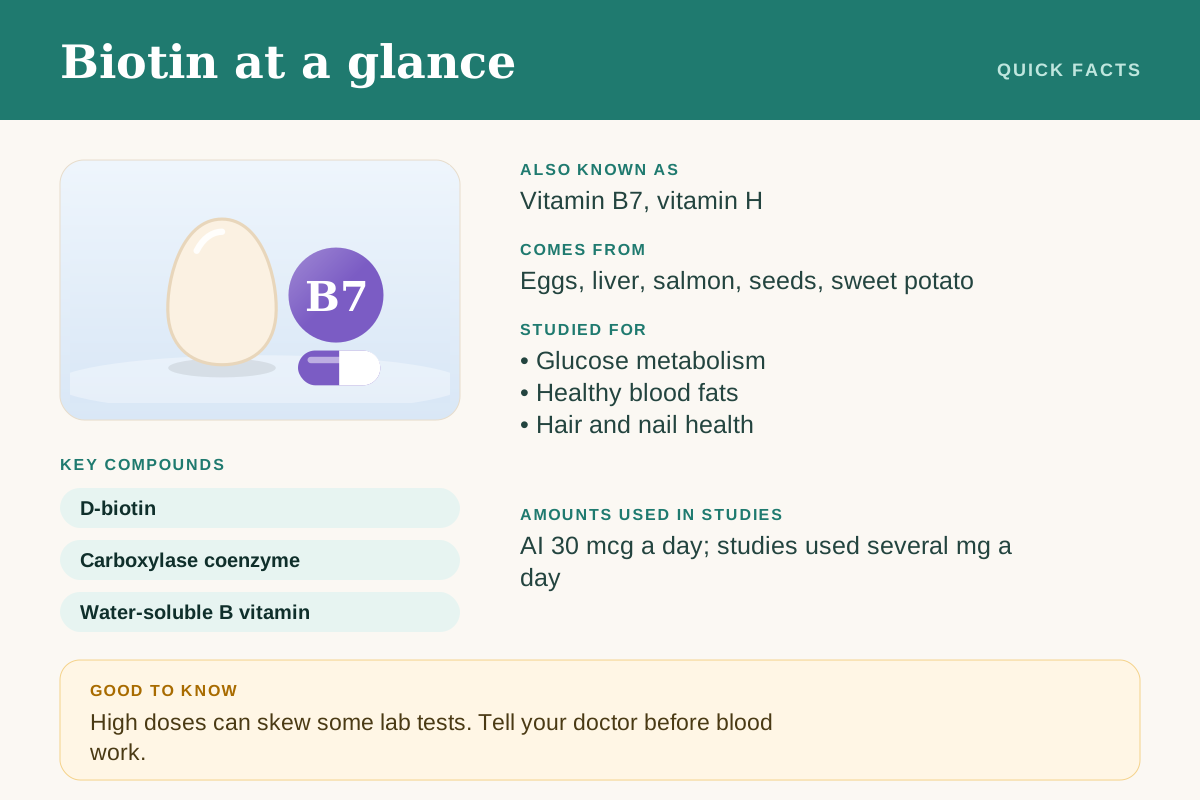
Biotin is a water-soluble B vitamin, sometimes listed as vitamin B7. Older books call it vitamin H, from the German words for hair and skin, which is where its beauty reputation started. Your body can't make biotin on its own, so it comes from food, and bacteria in the large intestine also produce some. Scientists still aren't sure how much of that bacterial biotin you absorb.
Because it dissolves in water, the body doesn't build up large stores of it. Small amounts are used each day and the extra leaves through the urine, which is one reason a steady supply from meals matters.
How biotin works in the body
Biotin is a coenzyme, a helper molecule that certain enzymes need before they can do their work. It attaches to a group of enzymes called carboxylases. Each one handles a different step in metabolism:
- Acetyl-CoA carboxylase helps the body build fatty acids.
- Pyruvate carboxylase helps the liver make glucose when you haven't eaten for a while, a process called gluconeogenesis.
- Two other carboxylases help break down certain amino acids, including leucine, and some fatty acids.
So biotin sits right where carbohydrate, fat and protein metabolism meet. Researchers have also found that biotin is involved in cell signaling and in regulating how some genes are switched on and off, an area that is still being studied.
When someone is truly short on biotin, the signs can include thinning hair, brittle nails, and a red, scaly rash around the eyes, nose and mouth. In more serious cases people can feel tired, depressed or have tingling in the hands and feet. True deficiency is uncommon in the US because biotin is found in so many everyday foods.
What biotin has been studied for
Blood sugar and metabolic health
Since biotin works with enzymes that handle glucose, researchers have wondered whether extra biotin could help people keep blood sugar in a healthy range. Several small studies have looked at biotin in adults with type 2 diabetes, sometimes alone and sometimes paired with chromium picolinate (chromium is another ColestZen ingredient). Some of these trials reported encouraging changes in blood sugar markers, while others found little difference. The NIH Office of Dietary Supplements describes the evidence as limited, so the fair summary is that biotin may support normal glucose metabolism and that larger, longer studies are still needed.
Blood fats
A smaller group of studies has looked at biotin and blood lipids, especially triglycerides. These were early and mostly small trials, so they point to an interesting direction for research rather than a settled answer.
Hair, skin and nails
This is the use most people buy biotin for. In people with a real deficiency, biotin clearly helps hair and nails recover. For healthy people who already get enough, the evidence is thin. A few small studies suggested biotin might help brittle nails, but there isn't good proof that it makes healthy hair grow faster or thicker.
Food sources of biotin
Eggs, organ meats, fish, seeds and some vegetables all supply biotin. The values below are approximate and come from the NIH Office of Dietary Supplements food list.
| Food | Serving | Biotin (approx.) |
|---|---|---|
| Beef liver, cooked | 3 ounces | 30.8 mcg |
| Egg, whole, cooked | 1 large | 10 mcg |
| Pink salmon, canned | 3 ounces | 5 mcg |
| Pork chop, cooked | 3 ounces | 3.8 mcg |
| Sunflower seeds, roasted | 1/4 cup | 2.6 mcg |
| Sweet potato, cooked | 1/2 cup | 2.4 mcg |
| Almonds, roasted | 1/4 cup | 1.5 mcg |
One kitchen detail worth knowing: raw egg whites contain a protein called avidin that binds biotin and stops you from absorbing it. Cooking breaks down avidin, so a cooked egg is a good biotin source, while eating lots of raw egg whites over a long time can lead to low biotin. That is mostly a concern for people who drink raw eggs in shakes.
Fruits and most grains contain only small amounts, and food processing can lower biotin content a bit. If your breakfast is a cooked egg and your lunch includes a handful of sunflower seeds or a sweet potato, you are already well on your way to the daily amount.
How much biotin adults need
There isn't enough data to set a formal RDA for biotin, so experts set an Adequate Intake (AI) instead. For adults 19 and older the AI is 30 micrograms a day. It stays at 30 mcg during pregnancy and rises to 35 mcg while breastfeeding. Most American adults get roughly this much from a normal diet.
No upper limit has been set for biotin because high intakes haven't been shown to cause harm in healthy people, and the extra is passed in urine. Supplements sold for hair and nails often contain far more than the AI, commonly 1,000 to 10,000 mcg per serving. Research on metabolic health has also used amounts well above what food provides, often several milligrams a day, but study doses varied widely.
Some groups are more likely to run low. These include people with a rare inherited condition called biotinidase deficiency, people with alcohol use disorder, people who take certain anti-seizure medicines for a long time, and pregnant or breastfeeding women, whose biotin status can dip even when they eat well.
A friendly heads-up about biotin and lab tests
This is the one biotin fact that really matters in daily life. Many lab tests use biotin as part of their chemistry. If you have a lot of biotin in your blood when you get tested, it can throw off the result, making it read falsely high or falsely low. The FDA has issued a safety communication about this.
The tests most often mentioned include thyroid hormone tests and troponin, a test doctors use to help diagnose a heart attack. A falsely low troponin reading is the reason the FDA took this seriously.
The fix is simple. Tell your doctor and the lab about every supplement you take, including multivitamins and hair, skin and nail products, since many contain biotin. Your doctor may ask you to pause biotin for a short time before a blood draw. If a result doesn't match how you feel, mention biotin so they can recheck it.
Safety and who should ask a doctor
Biotin is considered very safe at the amounts found in food and in most supplements. Side effects are rare. Even so, a few people should check in with their doctor or pharmacist first:
- Anyone with regular blood work coming up, because of the lab test issue above.
- People taking anti-seizure medicines such as carbamazepine, phenytoin or phenobarbital, which can lower biotin levels.
- People with diabetes who take blood sugar medicine, since ColestZen contains several ingredients studied for blood sugar support and your doctor may want to keep an eye on your numbers.
- Women who are pregnant or breastfeeding, who should run any supplement past their doctor.
Why biotin is in ColestZen
ColestZen is built around ingredients that support healthy metabolism, blood sugar and heart health. Biotin fits that goal well. It is the helper your enzymes need to handle glucose and fats, and it was paired with chromium in some of the blood sugar research mentioned above, which makes it a natural partner for the chromium already in the formula.
The brand doesn't publish how much biotin each capsule contains, so we can't tell you the exact dose. What we can say is that biotin rounds out the vitamin and mineral side of the blend, next to zinc, manganese, magnesium and chromium, while the herbs like cinnamon bark and bitter melon do their own work. If you want to see how all 18 ingredients come together, the guarantee, and how the product performed for us, read our full ColestZen review.
As with any supplement, biotin works best next to the basics: regular meals with eggs, fish, seeds and vegetables, daily movement, and regular checkups with your doctor.
Frequently asked questions
Is biotin the same as vitamin B7?
Yes. Biotin is the common name for vitamin B7. You may also see it called vitamin H in older books. It is a water-soluble B vitamin that helps enzymes break down carbohydrates, fats and protein.
Can biotin affect my blood test results?
It can. High levels of biotin in the blood can interfere with some lab tests, including thyroid tests and troponin, and the FDA has warned about this. Tell your doctor and the lab about any biotin you take, and they may ask you to pause it for a short time before your test.
How much biotin do adults need each day?
The Adequate Intake for adults is 30 micrograms a day, rising to 35 micrograms while breastfeeding. Most people get about this much from food such as eggs, salmon, seeds, sweet potato and meat.
Is biotin safe to take every day?
For most healthy adults, yes. No upper limit has been set because high intakes have not been shown to cause harm, and extra biotin leaves the body in urine. People on anti-seizure medicines, people with upcoming blood work and anyone who is pregnant should check with their doctor first.
Sources
- NIH Office of Dietary Supplements: Biotin fact sheet for health professionals
- U.S. Food and Drug Administration: Safety communication on biotin interference with lab tests
- MedlinePlus: Biotin
This guide is for general information and is not medical advice. Talk to your doctor before starting any supplement, especially if you take medication.