Bitter melon looks like a pale green cucumber covered in warts, and it tastes exactly as its name warns. In much of Asia, Africa and the Caribbean it is an everyday vegetable, and it has a long reputation in traditional medicine as a food for people with high blood sugar.
It is also one of the 18 ingredients in the ColestZen supplement. Below you will find what bitter melon is, how people cook and use it, what modern research has looked at, how it may work in the body, and the safety points worth knowing before you take it as a supplement.
What bitter melon is and where it grows
Bitter melon (Momordica charantia) is a climbing vine in the gourd family, which makes it a cousin of cucumbers, squash and pumpkins. The fruit is the part people eat. It is long and ridged, with bumpy skin that is bright green when young and turns yellow-orange as it ripens. Inside are flat seeds wrapped in a soft pulp that turns bright red in fully ripe fruit.
The plant needs heat and humidity, so it grows across tropical and subtropical regions: India, Pakistan, China, Southeast Asia, East Africa, the Caribbean and parts of South America. In the US you will mostly see it in Asian and Indian grocery stores, and some home gardeners in warm southern states grow it on trellises.
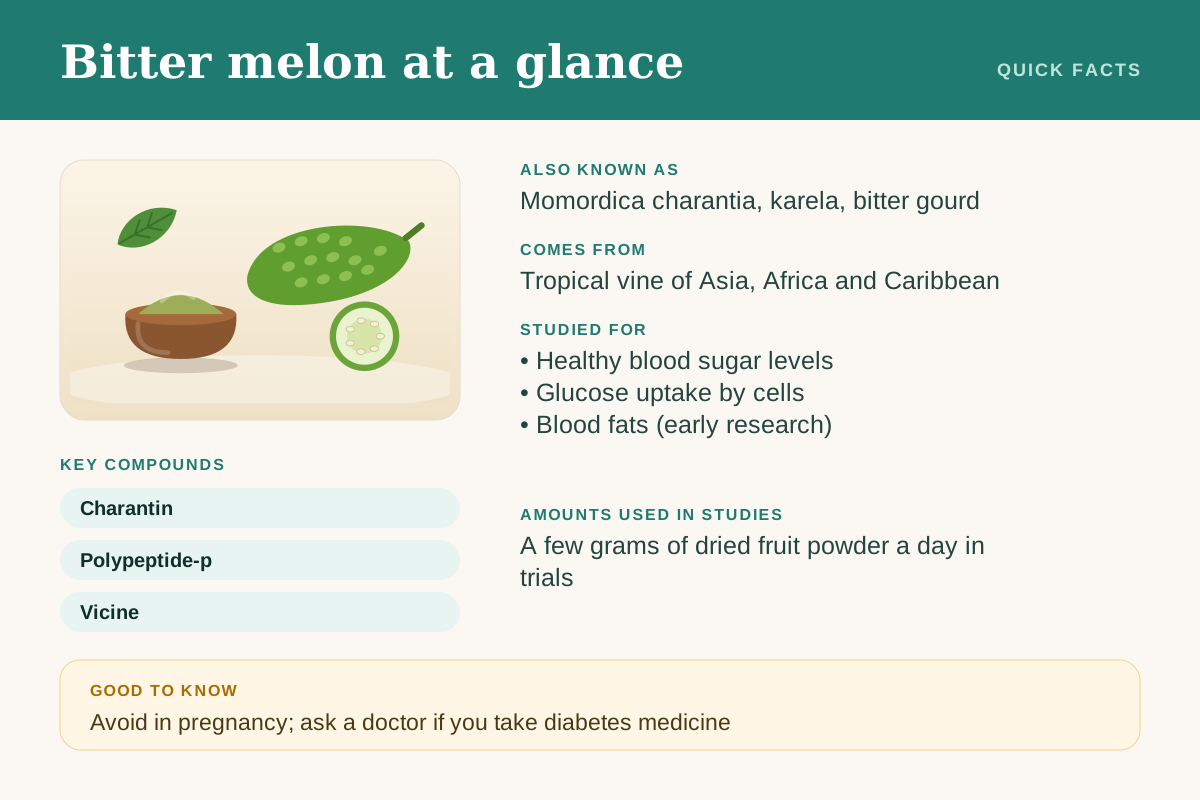
It goes by many names. In India it is karela, in the Philippines ampalaya, in Okinawa goya, and in English it is also called bitter gourd or balsam pear. In Jamaica and other Caribbean islands, a wild form of the vine is brewed into a bitter tea called cerasee.
How bitter melon is eaten and used traditionally
Cooks usually pick the fruit while it is still green and firm, slice it, scoop out the seeds and salt the slices to draw out some of the bitterness. In Okinawa it goes into goya champuru, a stir-fry with tofu, egg and pork. Indian kitchens stuff whole karela with spiced onion and fry it, and Chinese cooks often stir-fry it with black bean sauce. Filipino families scramble ampalaya with eggs and tomato.
As a food it is low in calories and gives you fiber, folate and a good amount of vitamin C. Its traditional medical use is older than its place on the dinner plate. Ayurvedic practitioners in India, traditional Chinese medicine and Caribbean folk healers have all used the fruit, juice or leaves for what we now call high blood sugar, as well as for digestion and general tonics. That long history of use for sugar balance is what drew researchers to it.
What bitter melon has been studied for
Blood sugar
Most research on bitter melon focuses on blood sugar in people with type 2 diabetes or prediabetes. Lab and animal studies have been consistently encouraging, with bitter melon extracts lowering blood glucose in diabetic animals. Human trials have been smaller and the results more varied. Some reported improvements in fasting glucose or post-meal sugar levels, and others found no clear difference compared with a placebo.
NCCIH notes that there is not enough reliable evidence in people to say bitter melon helps diabetes, and it should never replace prescribed treatment. Researchers point out that many trials were short, used different preparations, and included small numbers of people. Bitter melon may support healthy blood sugar, and larger, longer studies are needed to show how much.
Cholesterol and triglycerides
In animal studies, bitter melon has shown favorable effects on cholesterol and triglyceride levels and on fat stored in the liver. Human data on blood fats are limited. A few trials tracked lipids alongside blood sugar, with mixed findings. This is an area of active interest, especially because blood sugar and blood fats tend to move together in metabolic syndrome.
Weight and metabolic health
Some small studies have looked at waist size, body weight and markers of inflammation. The results are preliminary, but they fit the wider picture of bitter melon as a plant researchers study for overall metabolic health.
How bitter melon may work in the body
Bitter melon contains several active compounds that seem to work in different ways. Charantin is a mix of plant steroids that has lowered blood sugar in animal studies. Polypeptide-p is a protein that resembles insulin in some respects, which is why it is sometimes nicknamed plant insulin. Vicine, found mainly in the seeds, is another compound linked to the plant's effects on glucose. The fruit also contains bitter cucurbitane-type triterpenoids, the same family of compounds responsible for its sharp taste.
In lab studies, these compounds appear to help muscle and liver cells take up glucose, and some activate AMPK, an enzyme that acts like a fuel sensor inside cells and is also one of the targets of the common diabetes drug metformin. Other experiments suggest bitter melon may slow how quickly sugar is absorbed from the gut and may help the liver make less new glucose.
These are findings from cells and animals. They give a clear reason why bitter melon is studied for blood sugar, but how strongly they translate to people eating normal amounts is still being worked out.
Forms of bitter melon and amounts used in studies
Bitter melon is available in several forms, and each delivers a different amount of the active compounds:
| Form | How it is used | Notes |
|---|---|---|
| Fresh fruit | Cooked as a vegetable | Salting and blanching reduce bitterness |
| Juice | Pressed from raw fruit, often mixed with other juices | Very bitter; easy to drink too much |
| Dried fruit powder | Capsules or tablets | The most common form in clinical trials |
| Standardized extract | Capsules | More concentrated, smaller doses |
| Leaf and vine tea | Brewed, as with Caribbean cerasee | Traditional use, little formal research |
Clinical trials have most often given capsules of dried fruit powder, usually a few grams a day split between meals, for periods of a few weeks to a few months. Because products differ so much in strength, study amounts do not translate neatly from one product to another. If you want to try the vegetable itself, a few slices in a stir-fry once or twice a week is a gentle way to start, and pairing it with egg, tofu or a little pork balances the bitterness.
Safety and who should ask a doctor first
Eaten as a vegetable in normal amounts, bitter melon is safe for most adults. In supplement form, the most common side effects are stomach upset, cramping and diarrhea, especially at higher doses. A few groups need to be more careful:
- Pregnant women should avoid bitter melon supplements and medicinal amounts. Some compounds in the plant may cause uterine contractions or bleeding. There is also too little information on its safety while breastfeeding.
- If you take insulin, metformin or other diabetes medicines, bitter melon may add to their effect and push blood sugar too low. Talk with your doctor first and check your levels more often.
- People with G6PD deficiency, an inherited enzyme condition, should avoid the seeds, since vicine can trigger a type of anemia in them.
- Keep the ripe red seeds and seed coverings away from children, because they have been reported to make young children sick.
- Stop bitter melon supplements about two weeks before scheduled surgery, since they can affect blood sugar control.
If you have a chronic health condition or take daily medication, a quick check with your doctor or pharmacist before starting any blood sugar supplement is always a good habit.
Why bitter melon is in the ColestZen formula
ColestZen is a two-capsule daily supplement made with 18 ingredients chosen to support heart health and healthy cholesterol and blood sugar levels already in the normal range. Bitter melon brings a long record of traditional use for sugar balance and a growing body of research on glucose metabolism. In the blend it is joined by other plants studied for similar reasons, such as cinnamon bark, gymnema sylvestre and banaba leaf, along with minerals like chromium and magnesium that the body uses in insulin signaling and energy production.
The brand does not list how much bitter melon is in each capsule, so it is best seen as one part of a broader formula. It works alongside the basics that matter most for metabolic health: a balanced diet, regular movement, good sleep and the plan you have with your doctor. For a full look at the ingredients, the price options and the 60-day money-back guarantee, read our full ColestZen review.
Frequently asked questions
What does bitter melon taste like?
It is strongly bitter, more so than coffee or dark greens like kale. Salting the slices for 15 to 20 minutes, rinsing them and cooking them with egg, tofu, onion or a savory sauce makes the taste much milder.
Can bitter melon replace diabetes medication?
No. Human studies on bitter melon and blood sugar are mixed, and NCCIH says there is not enough evidence to use it for diabetes. Keep taking your prescribed treatment and ask your doctor before adding any blood sugar supplement.
Who should not take bitter melon?
Pregnant women, people with G6PD deficiency and young children should avoid bitter melon supplements. People taking insulin or other diabetes medicines should talk with their doctor first because their blood sugar could drop too low.
How much bitter melon is in ColestZen?
The company does not publish the amount of each ingredient per capsule. Bitter melon is one of 18 ingredients in the two-capsule daily serving, alongside cinnamon bark, gymnema sylvestre, chromium and others.
Sources
- NCCIH: Bitter Melon
- NCCIH: Type 2 Diabetes and Dietary Supplements: What the Science Says
- MedlinePlus: Bitter melon
- USDA FoodData Central: Balsam-pear (bitter gourd), pods, raw
This guide is for general information and is not medical advice. Talk to your doctor before starting any supplement, especially if you take medication.