Most people file blood sugar under diabetes and cholesterol under heart health, as if the two lived in separate folders at the doctor's office. Inside the body they share much of the same machinery. Insulin, the liver and the way your muscles take up fuel affect both sets of numbers at once, which is why a lab report showing a creeping fasting glucose often shows rising triglycerides as well.
This guide walks through how blood sugar and blood fats are connected, what the standard glucose and A1C ranges mean, and why prediabetes deserves attention well before it turns into diabetes. The second half covers the daily habits that help keep both glucose and blood fats in a healthy place, written for adults over 35 who want to make sense of their lab results.
How blood sugar and blood fats are connected
After a meal, carbohydrates break down into glucose, which enters the bloodstream. The pancreas responds by releasing insulin, a hormone that tells muscle, fat and liver cells to pull that glucose in and either burn it or store it. It also tells fat tissue to hold on to stored fat.
Insulin resistance means those cells respond weakly to the signal. The pancreas makes up for it by producing more insulin, and for a while blood sugar can stay in the normal range. The fat side of the system starts drifting first. Fat tissue releases more fatty acids into the blood, and the liver uses them to build more triglyceride-rich particles called VLDL. Over months and years, fasting glucose and A1C begin to climb too.
Extra weight around the waist, inactivity, short sleep, family history and age all make insulin resistance more likely. It rarely causes symptoms, so the first clues usually appear on a routine blood test.
What insulin resistance does to triglycerides and HDL
With insulin resistance, triglycerides creep up while HDL, the "good" cholesterol, drifts down. The two move together for a reason. When the blood carries lots of triglyceride-rich particles, some of that fat gets swapped onto HDL particles, and the body then clears those HDL particles faster. LDL particles go through a similar exchange and tend to become smaller and denser.
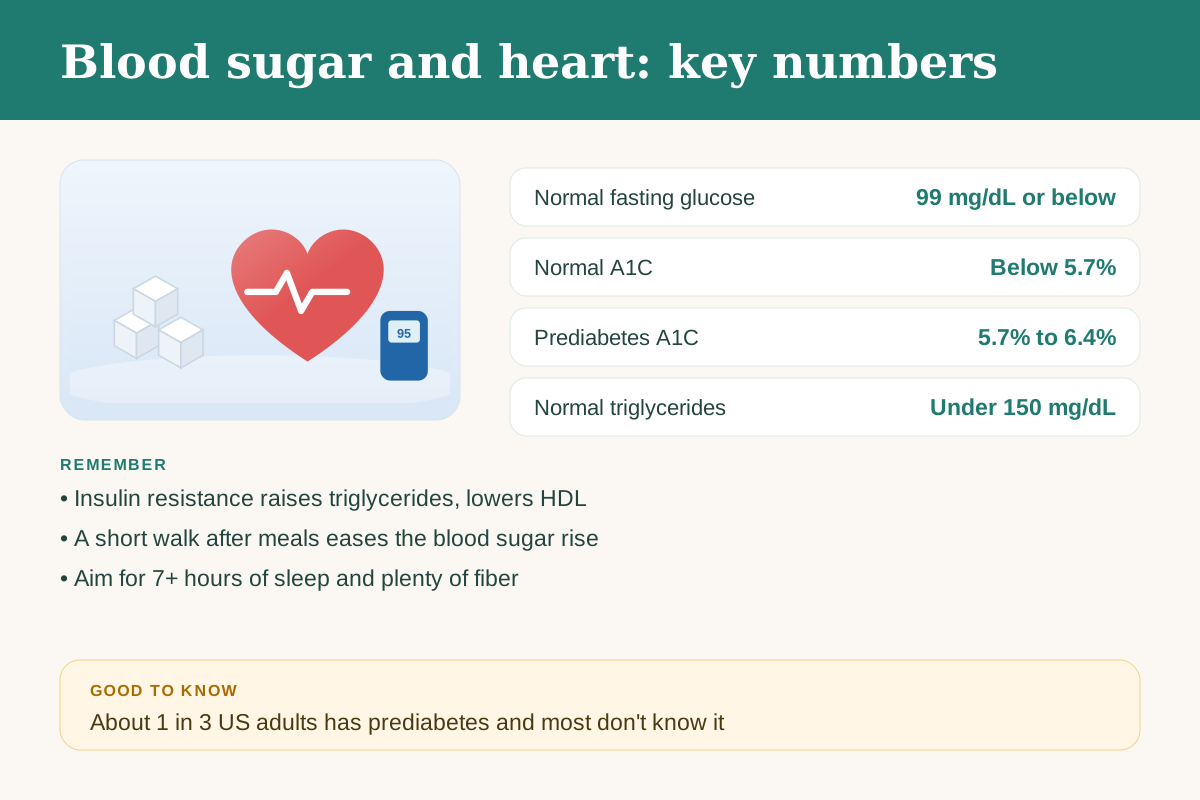
Standard reference values help put this in context. A normal fasting triglyceride level is under 150 mg/dL. HDL is considered low when it is under 40 mg/dL for men or under 50 mg/dL for women. High triglycerides and low HDL are two of the five features doctors use to define metabolic syndrome, along with a large waistline, higher blood pressure and higher fasting glucose. Having several of them together raises heart risk more than any single one, so if either your lipid panel or your glucose starts moving the wrong way, ask about the other.
Standard fasting glucose and A1C ranges
Two blood tests are used most often to check blood sugar. A fasting glucose test measures the sugar in your blood after an overnight fast, usually first thing in the morning. The A1C test shows the percentage of hemoglobin in your red blood cells that has glucose attached to it, which reflects your average blood sugar over the past two to three months. You don't need to fast for an A1C.
| Result | Fasting glucose | A1C |
|---|---|---|
| Normal | 99 mg/dL or below | Below 5.7% |
| Prediabetes | 100 to 125 mg/dL | 5.7% to 6.4% |
| Diabetes | 126 mg/dL or above | 6.5% or above |
A diabetes diagnosis is normally confirmed with a second test unless there are obvious symptoms, and A1C can be less reliable in people with sickle cell trait or thalassemia, so your doctor may repeat a borderline number or use a different test.
Why prediabetes matters for the heart
Prediabetes is common. The CDC estimates that about 98 million American adults have it, roughly 1 in 3, and more than 8 in 10 of them don't know it.
Prediabetes involves the heart from the start. The same insulin resistance that nudges glucose up is usually raising triglycerides, lowering HDL and pushing blood pressure higher at the same time. Blood sugar that runs above normal for years also wears on the inner lining of the blood vessels. Large studies have found higher rates of heart disease in people with prediabetes than in people with normal blood sugar, even before diabetes develops.
The results of the Diabetes Prevention Program, a large NIH study, are encouraging. Adults with prediabetes who lost 5 to 7 percent of their body weight through a structured lifestyle program, with healthier eating and about 150 minutes of activity a week, cut their risk of developing type 2 diabetes by 58 percent. The habits that move blood sugar in the right direction tend to help blood fats and blood pressure along the way.
Building meals that keep blood sugar steadier
How foods are combined on the plate counts for as much as any single food. A meal of mostly refined starch, like white bread or sugary cereal, digests quickly and sends glucose up fast. Add protein, some healthy fat and fiber, and digestion slows, so the rise is gentler.
The American Diabetes Association's plate method is an easy way to build a meal. Fill half the plate with non-starchy vegetables such as salad greens, broccoli, green beans or peppers. Put lean protein like fish, chicken, eggs, tofu or beans on a quarter, and a whole grain or starchy food such as brown rice, oats, quinoa or sweet potato on the last quarter.
Regular soda, sweet tea and large glasses of juice deliver sugar with nothing to slow it down, so swapping them for water or unsweetened tea is one of the simplest changes you can make. Cutting back on added sugar and refined starch also tends to bring triglycerides down, because the liver turns surplus carbohydrate into triglycerides. Alcohol raises triglycerides in many people too.
Why fiber helps
Soluble fiber forms a gel in the gut that slows how fast sugar is absorbed. It also binds some cholesterol-rich bile so the body clears more of it, which is why fiber is so useful for anyone watching both glucose and cholesterol. Oats, barley, beans, lentils, apples, citrus fruit, chia seeds and ground flaxseed are good sources.
The usual target is about 14 grams of fiber for every 1,000 calories you eat, which works out to roughly 25 grams a day for women and 38 grams for men, with slightly lower targets after age 50. Add it gradually and drink more water as you go to avoid gas and bloating.
Walking after meals and staying active
Working muscles pull glucose out of the blood, partly without needing insulin, so the time right after a meal is a good time to move. A short, easy walk after lunch or dinner can soften the rise in blood sugar that follows eating. A loop around the block is enough.
Across the week, the American Heart Association recommends at least 150 minutes of moderate aerobic activity, such as brisk walking, plus muscle-strengthening work on at least 2 days. Regular activity helps cells respond better to insulin, and it can raise HDL and lower triglycerides. Strength training builds muscle, and more muscle gives glucose more places to go. Getting up regularly from long stretches of sitting helps as well.
Sleep and weight
Even a few nights of short sleep can make the body less sensitive to insulin, and adults who regularly sleep less than 7 hours have higher rates of obesity, diabetes, high blood pressure and heart disease. Sleep medicine groups recommend at least 7 hours a night for adults. Loud snoring with daytime sleepiness can be a sign of sleep apnea, which is worth raising with your doctor.
Weight matters most when it sits around the middle. Fat stored deep in the abdomen sends fatty acids straight to the liver, feeding the cycle of insulin resistance and high triglycerides described earlier. Losing a modest amount, the same 5 to 7 percent used in the Diabetes Prevention Program, often improves fasting glucose, triglycerides and HDL together.
Everyday habits and what they help
A few small changes kept up for months will do more than a big overhaul you drop after two weeks.
| Habit | What to try | What it helps |
|---|---|---|
| Balanced plate | Half vegetables, a quarter protein, a quarter whole grains | A gentler rise in blood sugar after meals |
| More fiber | Oats, beans, lentils, fruit, chia or flaxseed | Steadier glucose and healthy LDL cholesterol |
| Fewer sugary drinks | Water, sparkling water or unsweetened tea instead of soda and juice | Blood sugar and triglycerides |
| Walk after meals | A short, easy walk after lunch or dinner | Blood sugar after eating |
| Weekly activity | 150 minutes of moderate activity plus strength work on 2 days | Insulin sensitivity, HDL, triglycerides and blood pressure |
| Enough sleep | At least 7 hours a night on a regular schedule | Insulin sensitivity and appetite control |
| Modest weight loss | 5 to 7 percent of body weight if you carry extra pounds | Fasting glucose, triglycerides and HDL |
| Go easy on alcohol | Drink less or skip it | Triglycerides and blood pressure |
| Regular checkups | Fasting glucose or A1C plus a lipid panel | Catching changes early |
The American Diabetes Association recommends that adults begin blood sugar screening at age 35, and earlier for people with extra weight and other risk factors. Ask your doctor how often you should be tested.
Why ColestZen pairs blood sugar ingredients with heart nutrients
Since blood sugar and blood fats run on so much of the same metabolism, it makes sense that ColestZen doesn't focus on cholesterol alone. Its 18-ingredient formula combines plants traditionally used for blood sugar, including cinnamon bark, bitter melon, gymnema sylvestre, banaba leaf and mulberry fruit, with chromium and alpha lipoic acid, which have been studied for their part in glucose metabolism. Alongside them sit nutrients involved in heart and blood vessel health, such as magnesium, which helps keep a normal heart rhythm, L-taurine, and the antioxidant vitamins C and E.
The formula, 2 capsules a day, is meant to support healthy cholesterol and blood sugar levels that are already in the normal range, alongside the habits above. It doesn't replace medication or medical care, and because several ingredients may lower blood sugar, anyone taking diabetes medication should check with their doctor before starting it. You can read about each ingredient, the pricing and the 60-day money-back guarantee in our ColestZen review.
Frequently asked questions
Can high blood sugar raise triglycerides?
They often rise together. With insulin resistance, fat tissue releases more fatty acids and the liver turns them, along with surplus carbohydrate, into triglyceride-rich particles. That is why improving blood sugar through diet, activity and weight loss often brings triglycerides down as well.
What is a normal A1C?
An A1C below 5.7% is considered normal. A result from 5.7% to 6.4% falls in the prediabetes range, and 6.5% or above on two tests is used to diagnose diabetes. Your doctor may repeat a borderline result or confirm it with a fasting glucose test.
Does walking after meals really help blood sugar?
Yes. Working muscles take up glucose from the blood, so a short, easy walk after lunch or dinner can soften the rise in blood sugar that follows eating. It works best as part of regular activity across the week, with at least 150 minutes of moderate exercise recommended for most adults.
Can prediabetes go back to normal?
For many people, yes. In the Diabetes Prevention Program, adults with prediabetes who lost 5 to 7 percent of their body weight through healthier eating and regular activity cut their risk of type 2 diabetes by 58 percent, and many brought their blood sugar back into the normal range. Work with your doctor and recheck your numbers over time.
Sources
- CDC: Testing for Diabetes (fasting blood sugar and A1C ranges)
- CDC: About Prediabetes and Type 2 Diabetes
- MedlinePlus: A1C Test
- NIDDK: The A1C Test and Diabetes
- NIDDK: Diabetes Prevention Program (DPP)
- NHLBI: ATP III Cholesterol Guidelines at a Glance (triglyceride and HDL levels)
- NHLBI: Metabolic Syndrome
- American Heart Association: Recommendations for Physical Activity in Adults
- American Diabetes Association: The Diabetes Plate Method
- Academy of Nutrition and Dietetics: Health Implications of Dietary Fiber
- CDC National Center for Health Statistics: Sleep duration among adults
This guide is for general information and is not medical advice. Talk to your doctor about your own numbers and treatment.