Cayenne is the bright red powder most of us keep somewhere near the stove and use a pinch at a time. It brings heat to chili, gumbo and hot sauce, and it has a long history as a folk remedy for poor circulation, cold hands and sluggish digestion.
The heat comes from capsaicin, one of the most studied plant compounds in the spice cabinet. Researchers have looked at it for appetite, energy use, blood vessels and pain. This article covers what cayenne is, what the research says so far, how much people use, and who should be careful with it.
What cayenne pepper is
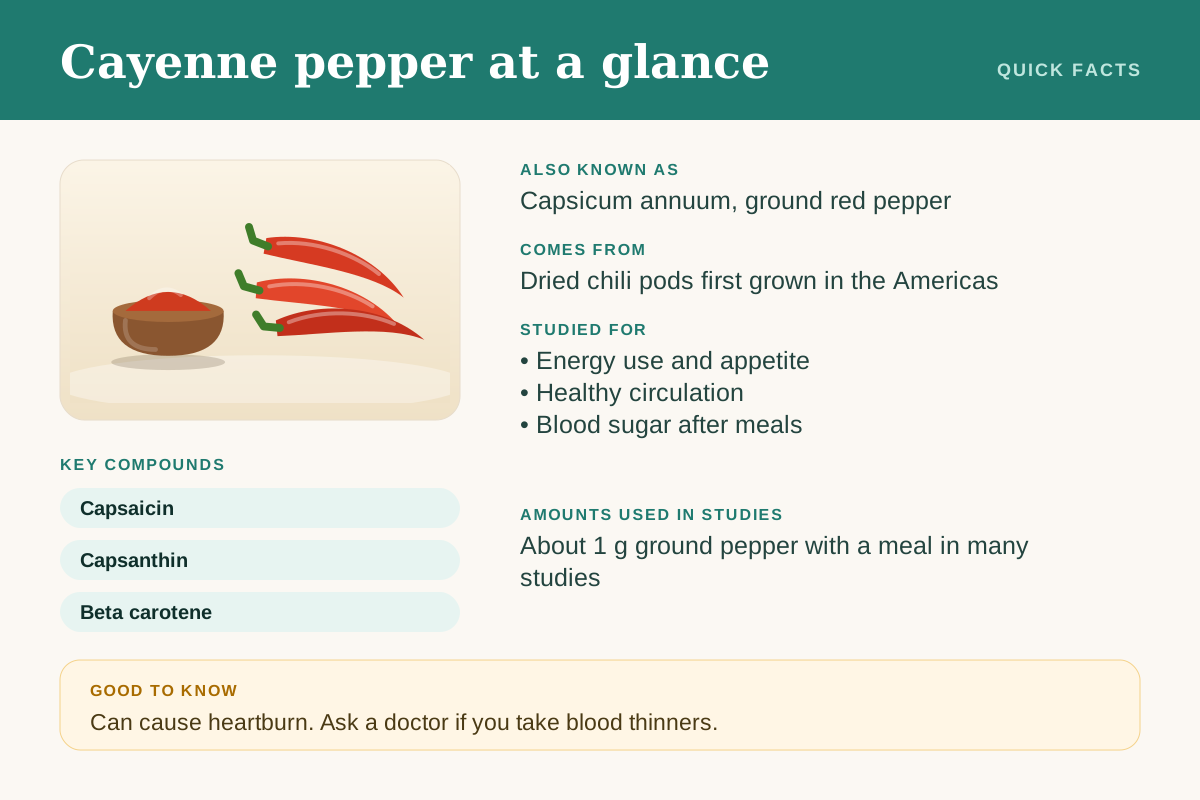
Cayenne is a hot chili pepper from the species Capsicum annuum, the same species that gives us bell peppers, jalapeños and paprika. The pods are long, thin and curved, and they turn from green to bright red as they ripen. Once dried and ground, they become the familiar red powder sold as cayenne or ground red pepper.
Chili peppers are native to the Americas. People in what is now Mexico were growing them thousands of years ago, long before Spanish and Portuguese traders carried the seeds to Europe, Africa and Asia in the 1500s. The name is usually traced to the city of Cayenne in French Guiana, on the northeast coast of South America. Today most cayenne is grown in warm climates such as India, China, Mexico and parts of Africa, and a good share of it still ends up in kitchens rather than supplement bottles.
On the heat scale, cayenne sits in the middle. It is far hotter than a jalapeño but much milder than a habanero.
| Pepper | Typical heat (Scoville heat units) |
|---|---|
| Bell pepper | 0 |
| Jalapeño | About 2,500 to 8,000 |
| Cayenne | About 30,000 to 50,000 |
| Habanero | About 100,000 to 350,000 |
What gives cayenne its heat
The burn comes from a family of compounds called capsaicinoids, and capsaicin is the main one. The plant makes it in the pale ribs inside the pod, which is why the seeds and membranes of a fresh chili taste hottest.
Capsaicin works by attaching to a receptor on nerve endings called TRPV1. This receptor normally reacts to real heat, so when capsaicin switches it on, your brain gets the same message it would get from something hot. That explains the sweating, the flushed face and the runny nose after a spicy meal, even though the temperature of the food has not changed.
Cayenne also contains carotenoids (the red pigments, including capsanthin and beta carotene), some vitamin C, and small amounts of other antioxidant compounds. In the tiny amounts used for seasoning these add up to very little, but they are part of the plant's overall makeup.
What cayenne has been studied for
Most of the research on cayenne focuses on capsaicin itself, either from ground pepper or from purified extracts. The results are interesting, though many studies are small and short, so it helps to read them as early signals.
Energy use and appetite
The best known area is metabolism. Because capsaicin triggers a warming response, scientists have measured whether it changes how many calories the body burns. Several small trials found a slight rise in energy use and fat burning after people ate red pepper, and some found that people felt fuller and ate a little less at the next meal. The effects are modest, and they seem strongest in people who do not eat spicy food often. Cayenne may support healthy weight habits, and it works best alongside sensible meals and regular movement.
Blood vessels and circulation
Herbalists have long called cayenne a circulation herb, and the warm, flushed feeling it causes fits that reputation. Lab and animal research suggests capsaicin may help blood vessels relax by affecting nitric oxide, the molecule that helps vessel walls widen. Large population studies have also looked at people who eat chili peppers regularly, and some have reported better heart health outcomes among chili eaters. Those studies show an association only, and chili lovers may differ from other people in many ways, so they cannot prove cause and effect.
Blood sugar and cholesterol
A smaller group of studies, mostly in animals and in small groups of people, has looked at capsaicin and blood sugar after meals or blood fats. Some results have been encouraging, but there is not yet enough human research to draw firm conclusions. For now it is fair to say cayenne has been studied for metabolic health and may support it alongside other healthy habits.
Pain relief on the skin
The most established medical use of capsaicin is topical. Creams and patches made with capsaicin are used for joint and nerve pain, and a high strength capsaicin patch is an FDA approved prescription treatment for certain types of nerve pain. Repeated exposure makes the nerve endings less sensitive over time. This is a different use from swallowing cayenne, but it shows how strongly capsaicin acts on the body's sensory nerves.
How people use cayenne
The simplest way to get cayenne is in food. A pinch goes a long way in soups, stews, eggs, roasted vegetables, marinades and spice rubs. Some people stir a little into warm lemon water or hot cocoa. Fresh red chilies, chili flakes and many hot sauces bring the same compound in different forms.
In research, the amounts vary a lot. Many appetite and metabolism studies used roughly 1 gram of ground red pepper with a meal, which is about half a teaspoon, while others used capsaicin extracts measured in milligrams. Capsules are popular with people who like the idea of capsaicin but not the burn in the mouth. Even then, a capsule can cause warmth or heartburn once it dissolves in the stomach.
Safety and who should check with a doctor
Cayenne is safe for most adults in the amounts found in food. Larger amounts or concentrated supplements can cause stomach upset, heartburn, sweating or a burning feeling when going to the bathroom. If you have acid reflux, ulcers or a sensitive gut, start small and see how you feel.
A few groups should talk to a doctor or pharmacist first:
- People taking blood thinners or antiplatelet medicines, since capsaicin may affect clotting and some interactions have been reported.
- People on medication for blood sugar or blood pressure, because several ingredients in metabolic formulas, cayenne included, have been studied for these effects.
- Anyone who is pregnant or breastfeeding. Cayenne in normal cooking is fine for most people, but supplement amounts have not been well studied in pregnancy.
- Anyone scheduled for surgery, who should mention all supplements to their care team.
Wash your hands after handling cayenne or fresh chilies and keep them away from your eyes. Capsaicin on the hands is a very common kitchen mistake, and it stings for a long time.
Why cayenne is in the ColestZen formula
ColestZen is a two capsule daily supplement built around 18 ingredients for heart and metabolic support. Cayenne fits that goal because capsaicin has been studied for energy use, appetite, blood vessel function and blood sugar. It also has a long folk history as a warming circulation herb, which matches the formula's focus.
Cayenne sits alongside other spices and herbs with a metabolic background, such as cinnamon bark, bitter melon and gymnema sylvestre, plus nutrients like chromium, magnesium and alpha lipoic acid. The brand does not list the amount of each ingredient per capsule, so the exact cayenne dose in ColestZen is not public. Putting it in a capsule means you get it without the burn on your tongue, though a sensitive stomach may still notice it.
If you want to see how the full blend comes together, including price, the money back guarantee and what we liked and didn't, read our full ColestZen review.
The bottom line on cayenne
Cayenne pepper is a common kitchen spice with a well studied active compound. Capsaicin acts on the same nerve receptors that sense heat, and that action is behind most of the research on metabolism, appetite and circulation. The human studies are small but promising, and the spice is safe for most people in food amounts. If you take medication for blood sugar, blood pressure or clotting, or you have a touchy stomach, check with your doctor before adding a cayenne supplement or a formula that contains it.
Frequently asked questions
Does cayenne pepper help with weight loss?
Small studies suggest capsaicin may slightly raise energy use and help people feel full after a meal. The effect is modest, so cayenne works best as one part of healthy eating and regular activity.
Is it safe to take cayenne every day?
For most adults, cayenne in food amounts is safe every day. Supplements can cause heartburn or stomach upset in some people, and anyone on blood thinners, blood sugar or blood pressure medicine should ask a doctor first.
Is cayenne the same as chili powder or paprika?
No. Cayenne is ground hot red pepper on its own. Chili powder is usually a blend of chili with cumin, garlic and other spices, and paprika comes from milder peppers of the same species.
How much cayenne is in ColestZen?
The brand does not publish the amount of each ingredient per capsule, so the exact cayenne dose is not known. It is one of 18 ingredients taken as two capsules a day.
Sources
- MedlinePlus: Capsicum
- FDA: Prescription capsaicin 8% patch labeling
- USDA FoodData Central: Spices, pepper, red or cayenne
This guide is for general information and is not medical advice. Talk to your doctor before starting any supplement, especially if you take medication.