Cinnamon is probably already in your kitchen, in the jar you reach for when you make oatmeal, banana bread or apple pie. It is also one of the most studied spices in nutrition research, mostly for its possible effects on blood sugar, and it is one of the 18 ingredients in the ColestZen supplement.
This guide explains where cinnamon comes from, why the kind you buy matters, what researchers have found so far, how much was used in studies, and who should check with a doctor before taking it in supplement form.
What cinnamon bark is and where it comes from
Cinnamon is the dried inner bark of several evergreen trees in the laurel family. Growers cut young shoots, scrape off the rough outer bark and peel away the thin layer underneath. As that layer dries it curls into the rolls sold as quills or sticks. Grind the quills and you get the brown powder in most spice racks.
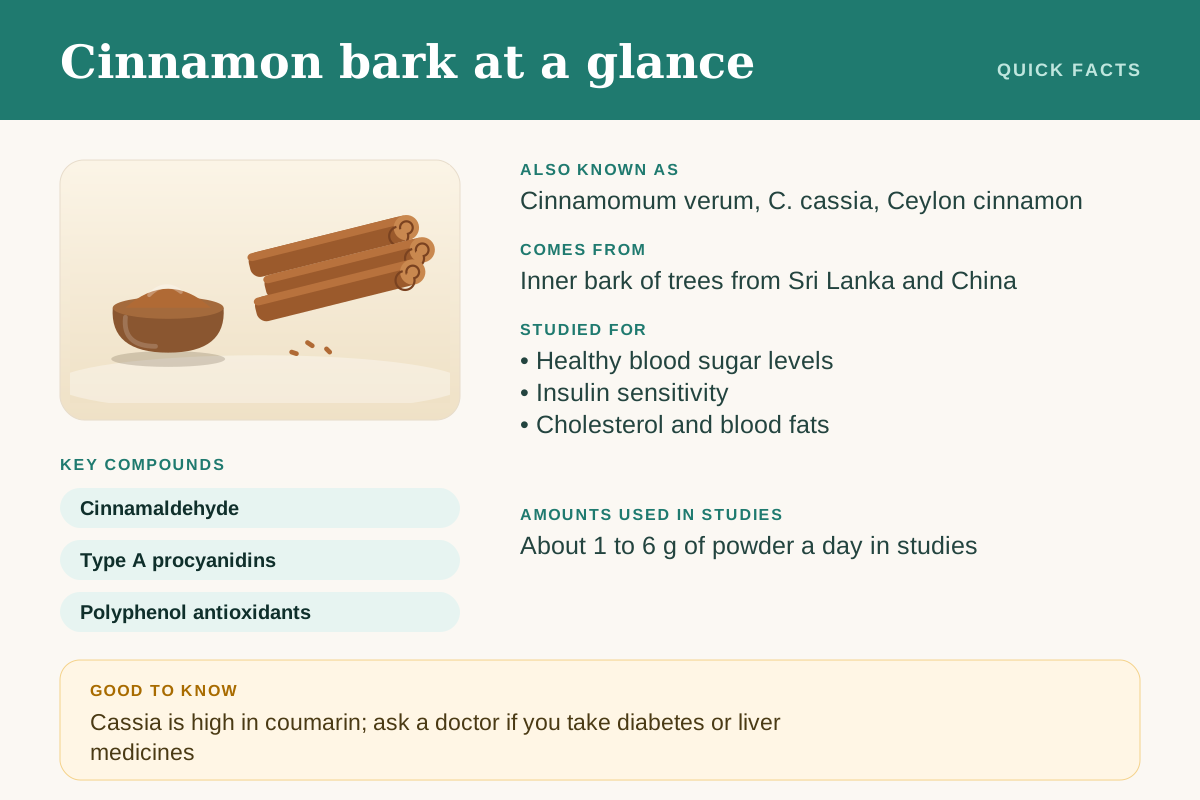
Two main kinds reach American stores. Ceylon cinnamon (Cinnamomum verum, often called true cinnamon) comes mostly from Sri Lanka and southern India. Its sticks are thin and papery, rolled in many soft layers like a cigar, and the flavor is mild and a little floral. Cassia cinnamon (Cinnamomum cassia) is grown mainly in southern China, and close relatives come from Indonesia and Vietnam. Cassia sticks are thick, hard, single rolls with a stronger, spicier taste. Unless the label says Ceylon, the cinnamon in a US supermarket is almost always cassia.
The two kinds are close enough to swap in a recipe, but they differ in one natural compound, coumarin, which comes up again in the safety section below.
A long history in food and traditional medicine
Cinnamon is one of the oldest traded spices in the world. The ancient Egyptians used it, it is mentioned in the Hebrew Bible, and for centuries Arab, Portuguese and Dutch traders competed for control of the cinnamon harvest in Sri Lanka. In traditional Chinese medicine, cassia bark (rou gui) has long been used as a warming herb, and Ayurvedic practice in India used cinnamon for digestion and seasonal colds.
Modern interest in cinnamon for metabolic health started in the early 2000s, when a small clinical study suggested it might help people with type 2 diabetes manage their blood sugar. Since then, many more trials have tested cinnamon powder and cinnamon extracts in adults with diabetes, prediabetes and metabolic syndrome.
What cinnamon has been studied for
Blood sugar
Most cinnamon research looks at glucose control. Trials usually measure fasting blood sugar and HbA1c, a lab value that reflects average blood sugar over roughly the past three months. Some trials have reported modest improvements in fasting glucose, and others found little change. Reviews that pool these studies have reached different conclusions, partly because the trials used different types of cinnamon, different doses and different groups of people.
The National Center for Complementary and Integrative Health (NCCIH) describes the evidence in people as mixed and notes that cinnamon should not replace medical care for diabetes. A fair reading is that cinnamon may support healthy blood sugar as part of a balanced diet, and that any effect is likely to be modest.
Cholesterol and blood fats
Many of the same trials also tracked total cholesterol, LDL cholesterol, HDL cholesterol and triglycerides. A few reported small favorable shifts, mostly in people whose numbers started out high, while others saw no meaningful difference. Researchers still treat this as an open question, and larger, longer studies would help settle it.
Blood pressure and overall metabolic health
Smaller studies have looked at blood pressure, waist size and markers of inflammation and oxidative stress. These findings are early and the trials are short, so they are best read as a reason for more research. They do explain why cinnamon so often shows up in formulas built around heart and metabolic health.
How cinnamon works in the body
Cinnamaldehyde, an aromatic oil in the bark, gives cinnamon its familiar smell and taste. The bark also contains polyphenols, especially a group called type A procyanidins, which act as antioxidants in lab tests.
Lab and animal research points to several ways these compounds may affect blood sugar. They appear to help cells respond to insulin, so glucose can move out of the bloodstream and into muscle and fat cells more easily. Cinnamon may also slow how fast the stomach empties after a meal, which can soften the rise in blood sugar that follows eating. Test tube studies suggest it can slow some of the gut enzymes that break carbohydrates down into sugar, too.
Most of this mechanism work comes from cells and animals. It explains why scientists keep studying cinnamon, and it also explains why results in people vary: what happens in a dish does not always carry over to a person eating a normal diet.
Cinnamon in food and amounts used in studies
A level teaspoon of ground cinnamon weighs about 2.6 grams. Human trials have used a wide range, most often between about 1 and 6 grams of powdered cinnamon a day, usually given as capsules split between meals. Other studies used concentrated water extracts, where a few hundred milligrams stand in for a larger amount of whole bark.
Here is how the two common kinds compare when you shop:
| Feature | Ceylon cinnamon | Cassia cinnamon |
|---|---|---|
| Botanical name | Cinnamomum verum | Cinnamomum cassia |
| Main growing areas | Sri Lanka, southern India | Southern China (relatives in Indonesia and Vietnam) |
| Stick shape | Thin, soft, many layers | Thick, hard, one layer |
| Flavor | Mild, sweet, floral | Strong and spicy |
| Coumarin content | Trace amounts | Much higher |
| Where you find it | Specialty stores, labeled Ceylon | Most US supermarket jars |
If you enjoy the flavor, there are easy ways to use more of it at home. Stir it into oatmeal or plain yogurt, add a pinch to coffee grounds before brewing, dust it over roasted sweet potatoes or squash, or use it the way Middle Eastern and Mexican cooks do, in savory stews, chili and spiced rice. Cinnamon adds sweetness without sugar, which is a small but practical win if you are watching your carbohydrates.
Safety and who should ask a doctor first
Cinnamon in normal food amounts is safe for most people. The main concern with larger daily amounts is coumarin, a natural compound found at high levels in cassia and only in traces in Ceylon. In sensitive people, a lot of coumarin over time can harm the liver. European food safety authorities have set a tolerable daily intake for coumarin, and regular use of cassia in larger amounts can go over it, especially for smaller adults and children. If you like cinnamon every day in generous amounts, Ceylon is the gentler pick.
Some people react to cinnamaldehyde with mouth sores or skin irritation, usually from cinnamon gum, candy or flavored oils. A few other points are worth knowing:
- If you are pregnant or breastfeeding, food amounts are fine, but supplement doses have not been studied enough, so talk with your doctor or midwife first.
- If you take insulin or other diabetes medication, cinnamon may add to its glucose-lowering effect. Ask your doctor before starting, and check your blood sugar more often for the first few weeks.
- If you have liver disease or take medicines that can strain the liver, avoid large amounts of cassia and get medical advice first.
- Because it may affect blood sugar, many doctors suggest stopping cinnamon supplements about two weeks before planned surgery.
Why cinnamon bark is in the ColestZen formula
ColestZen is a two-capsule daily supplement with 18 ingredients chosen to support heart health along with healthy cholesterol and blood sugar levels that are already in the normal range. Cinnamon fits that goal well. It is a familiar food with more than two decades of research on glucose metabolism, and it sits alongside other plants in the blend that have been studied for similar reasons, including bitter melon, gymnema sylvestre and banaba leaf. Chromium, also in the formula, is a mineral that has been studied for its part in how insulin works.
The company does not publish how much cinnamon each capsule contains, so you cannot compare it directly with study amounts. It makes the most sense to see cinnamon as one part of a combined formula, used together with a balanced diet, regular activity and the care plan you already have with your doctor. To see how all 18 ingredients fit together, plus pricing and the 60-day money-back guarantee, read our full ColestZen review.
Frequently asked questions
Is Ceylon or cassia cinnamon better for daily use?
For regular use in larger amounts, Ceylon cinnamon is usually the safer choice because it contains only trace amounts of coumarin. Cassia is fine as a kitchen spice in normal food amounts, and it is the kind most US grocery stores sell.
Can cinnamon replace my diabetes medication?
No. Research on cinnamon and blood sugar is mixed, and NCCIH advises that it should not replace standard medical care. If you take insulin or other glucose-lowering medication, talk to your doctor before adding a cinnamon supplement.
How much cinnamon have studies used?
Most human trials used between about 1 and 6 grams of powdered cinnamon a day, often in capsules taken with meals. Some used smaller amounts of concentrated extract. ColestZen does not publish its per-capsule amounts.
Does cinnamon have side effects?
In food amounts, side effects are rare. Large daily amounts of cassia can supply enough coumarin to strain the liver in sensitive people, and some people get mouth sores or skin irritation from cinnamon flavoring in gum or candy.
Sources
- NCCIH: Cinnamon
- NCCIH: Type 2 Diabetes and Dietary Supplements: What the Science Says
- MedlinePlus: Cassia cinnamon
- European Food Safety Authority: Coumarin in flavourings and other food ingredients
- USDA FoodData Central: Spices, cinnamon, ground
This guide is for general information and is not medical advice. Talk to your doctor before starting any supplement, especially if you take medication.