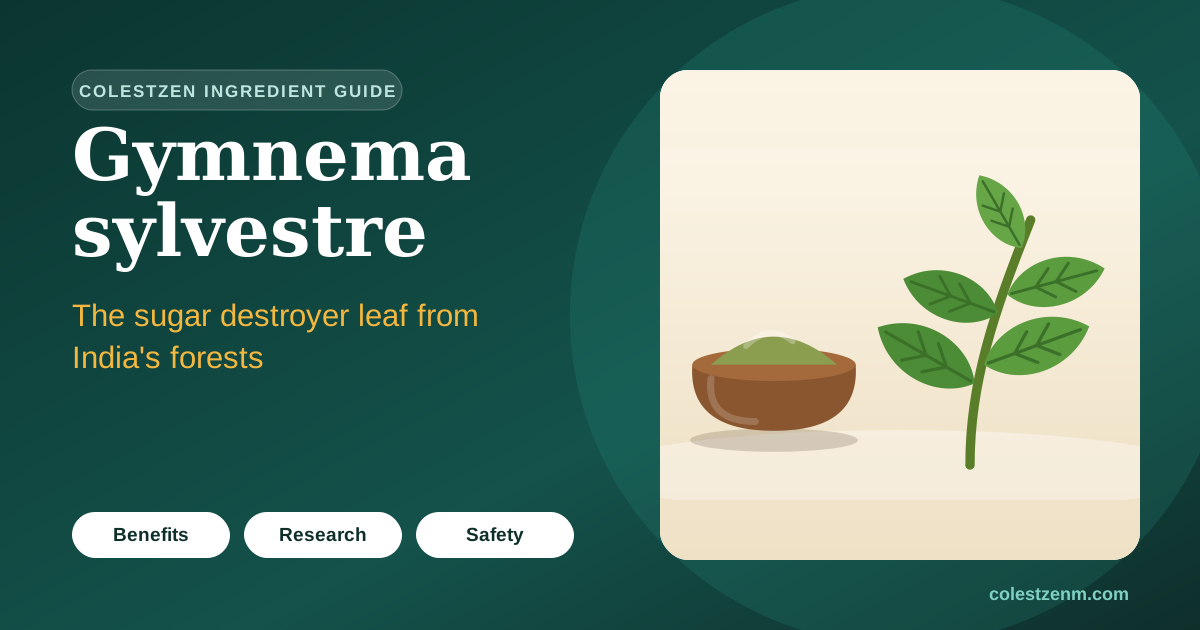
Chew a fresh gymnema leaf, then eat a spoonful of sugar, and the sugar will taste like little more than sand. That odd trick gave the plant its Hindi name, gurmar, which means sugar destroyer, and it is a big part of why researchers have studied it for blood sugar and sweet cravings.
Gymnema sylvestre is one of the 18 ingredients in the ColestZen supplement. This article covers where it comes from, how it has been used in Ayurveda, what studies have looked at, how it seems to work, and who should talk with a doctor before taking it.
What gymnema sylvestre is and where it grows
Gymnema sylvestre is a woody climbing vine in the dogbane family, the same plant family as milkweed and periwinkle. It grows wild in the tropical forests of central and southern India, and it is also found in parts of Africa and Australia. The vine wraps around trees and shrubs and has small, oval, slightly fuzzy leaves with clusters of tiny yellow flowers.
The leaves are the part used in supplements. They are harvested, dried and either ground into powder or processed into an extract. Most products in the US are leaf extracts standardized to a stated percentage of gymnemic acids, the compounds most closely linked to the plant's effects.
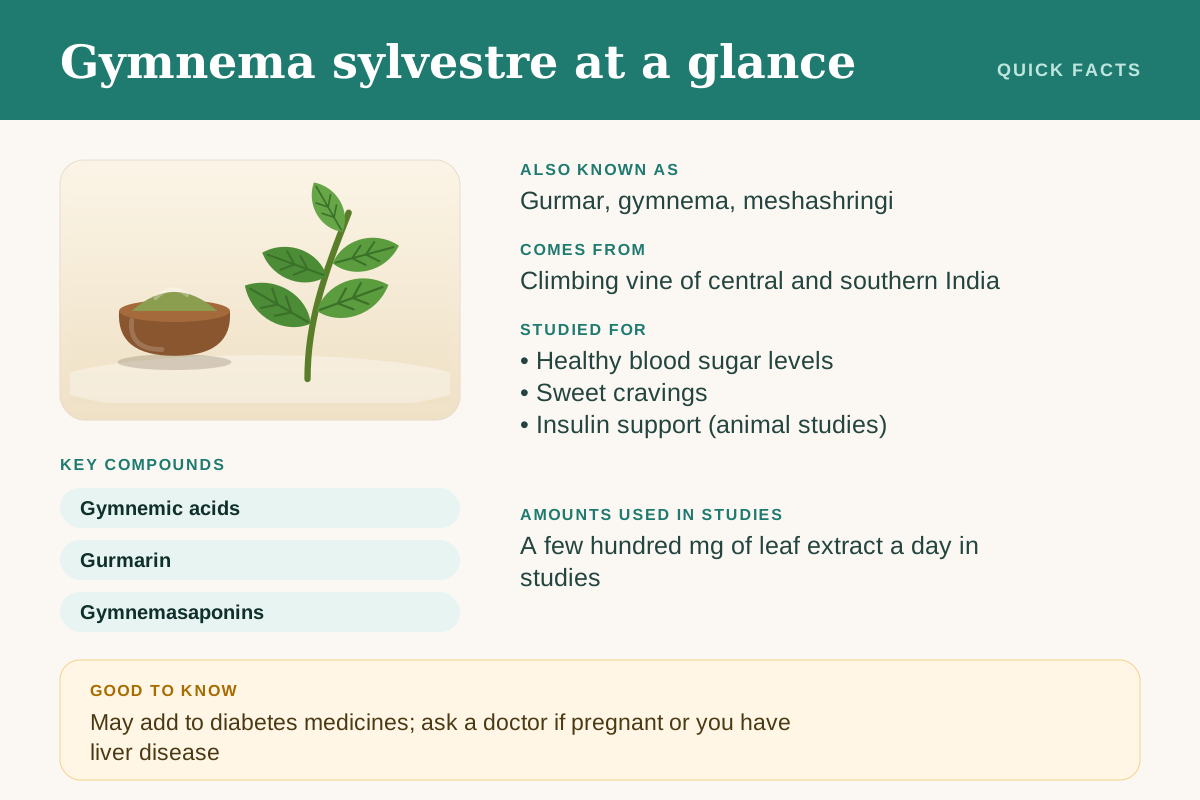
Besides gurmar, you may see it called gymnema, gurmarbooti or meshashringi, a Sanskrit name that refers to the ram's horn shape of its seed pods.
A long history in Ayurveda
Gymnema has been part of Ayurveda, the traditional medicine system of India, for a very long time. Ayurvedic texts describe a condition called madhumeha, which roughly translates as honey urine. It matches what we now call diabetes, since high blood sugar spills sugar into the urine and makes it taste sweet. Gymnema leaf was one of the herbs traditionally given for this condition, as well as for digestion and general wellbeing.
That long record of use, combined with the sugar-blocking effect anyone can feel on the tongue, made gymnema a natural candidate for modern research on blood sugar.
The sweet-blocking effect on the tongue
The tongue has receptors that detect sweetness. Gymnemic acids have a structure similar to glucose, so they can sit on those sweet receptors and block them for a while. During that time, sugar, honey and sweet fruit taste flat or even unpleasant, while salty, sour and bitter tastes stay the same. The effect fades on its own as the compounds wash away.
This has led to small studies using gymnema lozenges or mints to see whether blocking sweet taste can help people eat fewer sweets. Early results suggest some people reach for less candy or dessert right after using them. For anyone trying to cut back on sugar, that is a practical and interesting angle, though the research is still small.
What gymnema has been studied for
Blood sugar
The main focus of gymnema research is glucose control. Several small human studies, many of them from India, have looked at people with type 2 diabetes, and a few included people with type 1 diabetes. Some reported lower fasting blood sugar and HbA1c, and a reduced need for diabetes medication, when gymnema extract was added to usual care. These studies were often small, short or not well controlled, so researchers describe the evidence as promising but limited. Animal studies have been more consistent.
Cholesterol and triglycerides
Some of the same trials, along with animal research, tracked blood fats. A few found favorable shifts in triglycerides and LDL cholesterol. This is early evidence, and it fits with gymnema's main use as a metabolic herb.
Sugar cravings and weight
Beyond the lozenge studies, a few trials have looked at body weight and appetite in adults who were overweight. Findings are mixed and modest, and gymnema is best seen as one small helper alongside eating habits and activity.
How gymnema works in the body
Gymnemic acids are a group of plant compounds called triterpene saponins. Their resemblance to glucose explains most of what they do. On the tongue, they block sweet receptors. In the intestines, lab studies suggest they may occupy the same sites that normally absorb sugar, slowing how much glucose gets into the bloodstream after a meal.
Animal research points to effects on the pancreas as well. In diabetic rats, gymnema extracts have supported insulin release and appeared to protect or help regenerate the beta cells that make insulin. Whether this happens in people to any meaningful degree has not been shown.
Gymnema leaves also contain gurmarin, a small protein that blocks sweet taste in rodents but has little effect on the human tongue, and other saponins called gymnemasaponins. Researchers are still sorting out which compounds matter most for blood sugar.
Forms of gymnema and amounts used in studies
| Form | How it is used | Notes |
|---|---|---|
| Fresh leaf | Chewed briefly | Shows the sweet-blocking effect within seconds |
| Dried leaf powder | Capsules or mixed into water | Traditional Ayurvedic form |
| Standardized extract | Capsules | Most common in supplements and research |
| Tea | Leaves steeped in hot water | Mild effect, popular in India and Japan |
| Lozenges or mints | Dissolved on the tongue | Used in studies on sweet cravings |
Most human studies used a standardized leaf extract, usually a few hundred milligrams a day taken with meals, for periods ranging from a few weeks to more than a year. Because extracts vary in strength, those study amounts do not transfer neatly from one product to another. Gymnema is not a common food, so supplements and tea are the main ways people take it.
If you want to feel the taste effect for yourself, open a gymnema capsule or brew a strong cup of the tea, hold it in your mouth for 30 seconds or so, then try a square of chocolate or a sip of soda. Many people find it an eye-opening way to notice how much sweetness they are used to. Some people use the tea in the evening, when cravings for dessert tend to hit hardest. For blood sugar purposes, studies have generally given gymnema with meals, since that is when the body is handling the most glucose. Like most plant extracts, it is something people take steadily over weeks and months, so give it a few weeks before judging how it fits your routine.
Safety and who should ask a doctor first
Gymnema is generally well tolerated in the amounts used in studies. Some people get mild stomach upset or nausea, especially when they take it on an empty stomach. A few points are worth knowing before you start:
- If you take insulin or other diabetes medicines, gymnema may add to their effect and lower your blood sugar too much. Talk with your doctor first and check your levels more often, because your medication dose may need adjusting.
- There is not enough reliable information on gymnema during pregnancy or breastfeeding, so it is best avoided unless your doctor approves.
- Rare cases of liver injury have been reported in people taking gymnema products. If you have liver disease, ask your doctor before using it, and stop and seek care if you notice dark urine, yellowing skin or unusual tiredness.
- People allergic to plants in the milkweed family may react to gymnema.
- Because it can affect blood sugar, stop gymnema supplements about two weeks before scheduled surgery.
Why gymnema sylvestre is in the ColestZen formula
ColestZen is a two-capsule daily supplement with 18 ingredients chosen to support heart health and healthy cholesterol and blood sugar levels already within the normal range. Gymnema brings something a little different to the blend. Along with research on glucose metabolism, it has that unusual effect on sweet taste, which ties in nicely with the everyday goal of eating less sugar. It sits next to other plants studied for similar reasons, including cinnamon bark, bitter melon and banaba leaf, and minerals like chromium and zinc that the body uses in insulin function.
The brand does not publish the amount of gymnema in each capsule, so think of it as one ingredient in a combined formula. It works best next to a balanced diet, regular activity and the care plan you have with your doctor. To read how gymnema fits with the other 17 ingredients, and to see pricing and the 60-day money-back guarantee, visit our full ColestZen review.
Frequently asked questions
Why does gymnema make sugar taste bland?
Gymnemic acids in the leaf have a structure similar to glucose, so they attach to the sweet taste receptors on the tongue and block them for a while. Sugar tastes flat until the effect wears off, while salty, sour and bitter tastes stay normal.
Can gymnema replace diabetes medication?
No. Human studies on gymnema are small and limited, and no herb should replace prescribed treatment. If you take insulin or other glucose-lowering medicine, ask your doctor before adding gymnema, since your blood sugar could drop too low.
How much gymnema have studies used?
Most studies used a standardized leaf extract, commonly a few hundred milligrams a day taken with meals. Products differ in strength, and ColestZen does not publish the amount of gymnema per capsule.
Is gymnema safe for long-term use?
Some studies have given gymnema for more than a year without major problems, and most people tolerate it well. Rare liver reactions have been reported, so people with liver disease or who are pregnant should check with a doctor first.
Sources
- NCCIH: Type 2 Diabetes and Dietary Supplements: What the Science Says
- NIH LiverTox: Gymnema sylvestre
- MedlinePlus: Gymnema
This guide is for general information and is not medical advice. Talk to your doctor before starting any supplement, especially if you take medication.