Taurine is one of the most plentiful free amino acids in your body, and your heart muscle holds more of it than almost any other tissue. Most people know the name from energy drink cans, but researchers have been interested in it for much longer, mainly for its links to heart function, blood pressure and the way the liver handles cholesterol.
This guide explains what L-taurine is, where you get it, what it has been studied for, the amounts used in research and who should check with a doctor before taking it as a supplement.
What L-taurine is
Taurine was first isolated in 1827 from ox bile, which is where the name comes from (taurus is Latin for bull). Chemically it is an amino sulfonic acid. That makes it a little unusual, because your body doesn't use it to build proteins the way it uses amino acids like leucine or lysine. It floats freely inside cells, where it does a range of housekeeping jobs.
You will see it sold as both taurine and L-taurine. The two names refer to the same compound. Many amino acids come in left-handed (L) and right-handed (D) forms, but taurine's structure doesn't have that kind of mirror image, so the L on the label is mostly a naming habit carried over from other amino acid supplements.
The highest concentrations are in the heart, the retina of the eye, skeletal muscle, the brain and white blood cells. Its importance shows clearly in cats, which can't make enough taurine on their own. Cats fed diets low in taurine can develop a serious heart muscle disease and vision problems, which is why taurine is added to commercial cat food.
Where it comes from
Healthy adults make some taurine in the liver from two sulfur-containing amino acids, methionine and cysteine, with help from vitamin B6. The rest comes from food. Because the body can make it, taurine is called conditionally essential: most people don't need it from the diet, but needs may rise during illness or stress, and newborns rely on breast milk or formula for it. That is why infant formula has taurine added.
Taurine is found almost entirely in animal foods. Seafood tends to have the most.
| Food | Taurine content |
|---|---|
| Scallops, clams and mussels | Among the highest of any food |
| Octopus and squid | High |
| Dark meat chicken and turkey | Moderate, much more than white meat |
| Fish such as tuna and cod | Moderate |
| Beef and pork | Lower to moderate |
| Milk and eggs | Small amounts |
| Most plant foods | Little or none (some seaweeds are an exception) |
A typical mixed diet supplies somewhere between a few dozen and a few hundred milligrams a day, depending on how much seafood and meat you eat. People who eat a vegan diet get very little from food and rely on what the liver makes. An 8 ounce energy drink often contains around 1,000 mg, which is more than most people get from a full day of meals.
How it works in the body
Bile and cholesterol
This is the job that connects taurine most directly to cholesterol. Your liver turns cholesterol into bile acids, then attaches either taurine or another amino acid, glycine, to make bile salts. Those bile salts are released into the gut to help you digest fats and absorb fat-soluble vitamins. Making bile acids is one of the main ways your body clears cholesterol, so researchers have long been curious about whether more taurine might support that process.
Heart muscle and blood vessels
Inside heart muscle cells, taurine helps manage the movement of calcium, which controls each contraction. It also helps cells keep the right balance of water and salts. In blood vessels, lab studies suggest it may help the vessel lining relax and may reduce some markers of oxidative stress and inflammation.
Nerves and the eye
Taurine acts on some of the same calming receptors in the brain as the messenger GABA, and it helps protect cells in the retina. These roles are part of why it is studied for nerve and eye health, though that research is still early.
What it has been studied for
Healthy blood pressure
Several small clinical trials have given taurine supplements to adults with high-normal or mildly high blood pressure. Some reported modest drops in blood pressure over a few weeks to a few months, along with signs of better blood vessel function. The studies were small, so researchers describe the results as promising and in need of larger trials.
Heart function
Researchers in Japan have studied taurine in people with heart failure for decades, and some small trials reported improvements in symptoms or exercise capacity. Population studies have also noted that groups who eat a lot of seafood, and therefore a lot of taurine, tend to have lower rates of heart disease, though diet, lifestyle and genetics all play a part in those findings.
Cholesterol and blood fats
In animal studies, taurine has helped lower cholesterol levels in several experiments, likely through the bile acid pathway described above. Human studies are fewer and smaller. Some found improvements in total cholesterol or triglycerides, while others found no clear change. The evidence here is still developing.
Blood sugar
People with diabetes often have lower taurine levels in their blood than people without it. That has led to trials testing whether supplements help with glucose control. So far the human results are mixed, and taurine is best seen as a supporting nutrient for metabolic health with research still under way.
Exercise and aging
Some studies in athletes have looked at taurine for endurance and muscle recovery, with modest and inconsistent results. Animal research on taurine and aging has drawn press attention in recent years, but human evidence is at an early stage.
Amounts used in research
Human studies have used a wide range of doses:
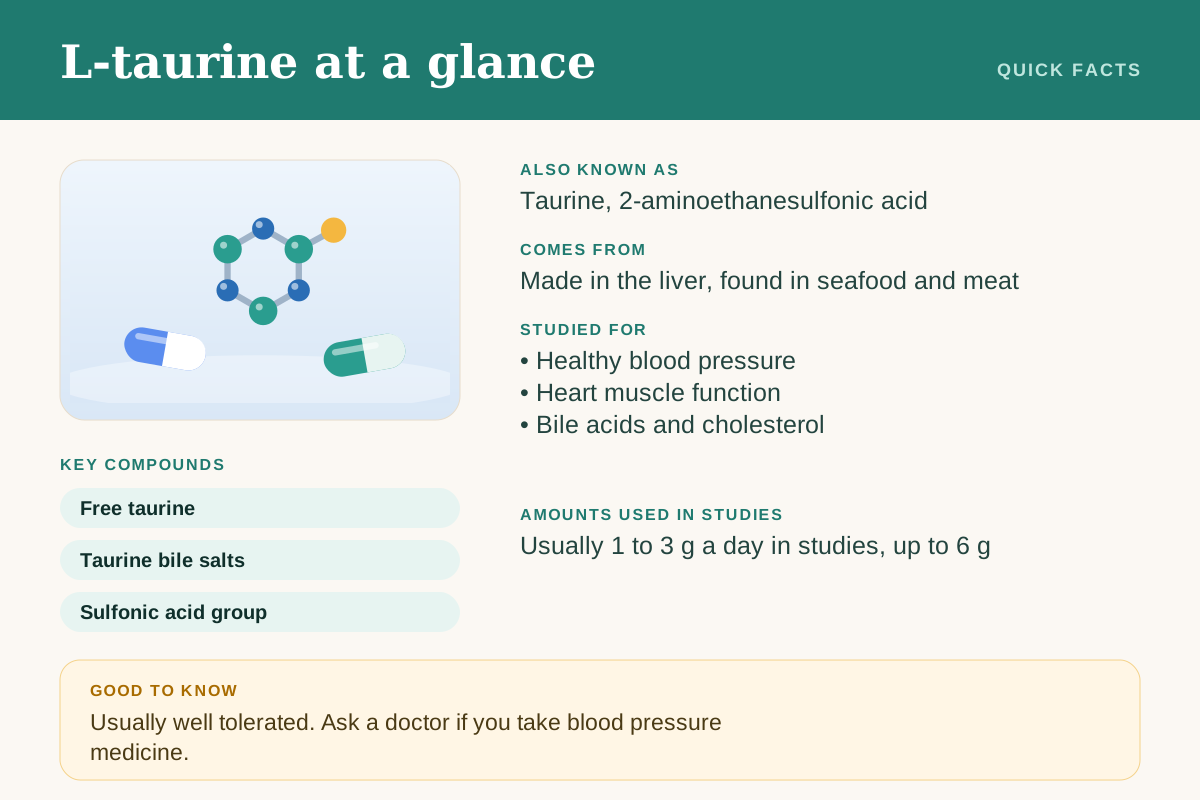
- 1 to 3 g a day is the range seen most often, split into one or more doses.
- Some trials, including heart studies, have used up to 6 g a day for short periods.
- Intakes of up to about 3 g a day from supplements are generally regarded as safe for healthy adults over the long term.
Taurine dissolves easily in water and can be taken with or without food. It is also cheap to make, so supplements are typically made in a lab rather than extracted from animal sources, which makes them suitable for vegetarians.
Safety and who should ask a doctor
Taurine is one of the better tolerated supplements. Studies at normal doses have reported few side effects, mostly mild stomach upset in some people. When energy drinks cause problems, the caffeine and sugar are usually responsible.
Still, it is sensible to check with your doctor first if you:
- Take medicine for high blood pressure, since taurine may lower blood pressure a little and the effects could add up.
- Take medicine for diabetes or have trouble with low blood sugar.
- Have kidney disease, because the kidneys clear taurine from the body.
- Take any medicine for mood or seizures, since taurine acts on the nervous system.
- Are pregnant or breastfeeding. Taurine from food and breast milk is normal, but there is little research on supplements during pregnancy.
Why it's in the ColestZen formula
ColestZen combines ingredients studied for heart, cholesterol, blood sugar and overall metabolic health. Taurine fits that picture through its job in bile acid formation, the route the liver uses to clear cholesterol, and through its presence in heart muscle, where it helps manage the calcium signals behind each heartbeat. The early research on blood pressure and blood vessel function adds to its appeal.
It also complements the formula's minerals. Magnesium and taurine both affect how calcium moves in and out of heart and muscle cells, and they are often paired in heart health products for that reason. Next to the herbal ingredients aimed at blood sugar, taurine brings a heart-focused nutrient that the body already uses every day.
The brand doesn't publish how much taurine each capsule contains, so it can't be compared directly with the doses in studies. For our take on the full blend, value and money-back guarantee, see our full ColestZen review.
Getting the most from taurine
If you want more taurine from food, seafood is the easiest route. A plate of steamed mussels or clams, a tuna salad, or switching from chicken breast to thighs a couple of times a week will raise your intake without much effort. Grilled fish twice a week also fits the eating patterns most often linked with heart health.
If you take it as part of a supplement, take it at the same time each day and give it at least a couple of months before deciding how you feel. Blood pressure readings at home are a simple way to keep track. Write them down, bring the log to your next checkup, and let your doctor know about every supplement you take so your care can be planned around the full picture.
Frequently asked questions
Is L-taurine the same as taurine?
Yes. Both names refer to the same compound. Taurine doesn't have separate left and right-handed forms like many amino acids do, so the L is mainly a labeling convention.
Which foods contain the most taurine?
Shellfish such as scallops, clams and mussels are among the best sources, followed by octopus, squid, dark meat poultry and fish. Plant foods contain little or none, so vegans get very little from food and rely on what the liver makes.
Is the taurine in energy drinks bad for your heart?
Taurine itself is well tolerated at the amounts found in energy drinks. Concerns about energy drinks usually involve their caffeine and sugar. If you have a heart condition, ask your doctor about energy drinks in general.
How much taurine is safe to take?
Studies commonly use 1 to 3 g a day, and some have used up to 6 g a day for short periods. Up to about 3 g a day is generally regarded as safe for healthy adults. Check with your doctor if you take blood pressure medicine or have kidney disease.
Sources
- MedlinePlus: Taurine
- Linus Pauling Institute Micronutrient Information Center
- NCCIH: Energy drinks
This guide is for general information and is not medical advice. Talk to your doctor before starting any supplement, especially if you take medication.