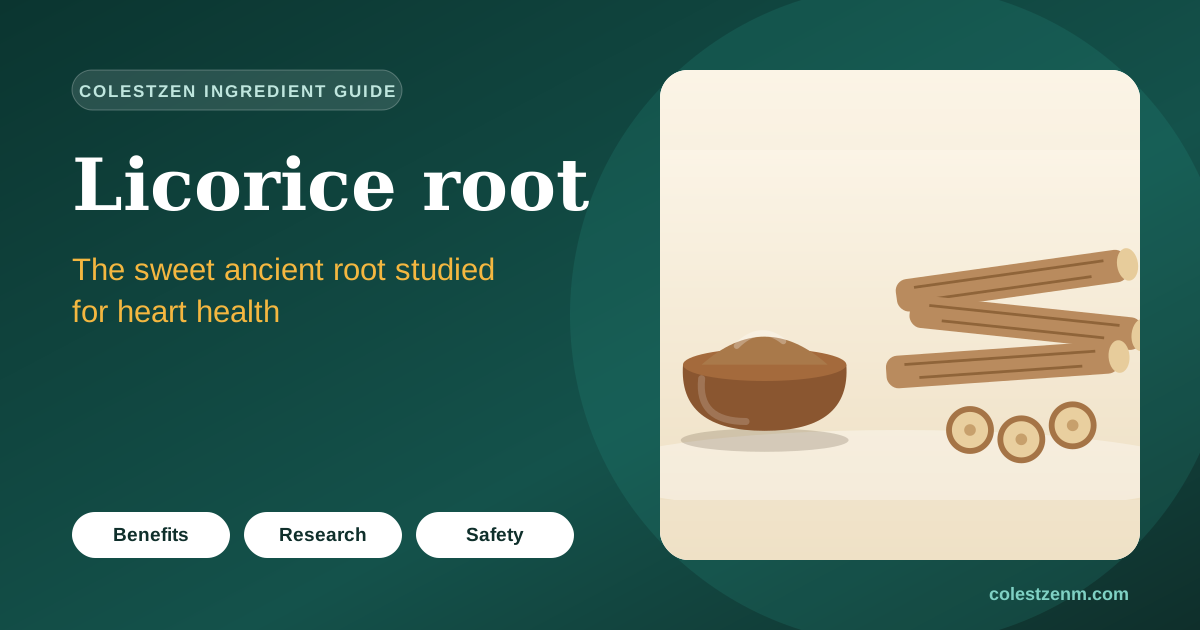
Licorice root is one of the oldest herbs in recorded use. Dried pieces of the root have been chewed, brewed and powdered from ancient Egypt and Greece to China, where it is still added to many traditional herbal blends to balance the taste of other plants. It is naturally sweet, with a warm, earthy flavor that most people recognize right away.
Licorice is also an herb that deserves a little extra care, because in larger amounts it can raise blood pressure and lower potassium. This article explains where licorice comes from, what researchers have studied it for, how it works in the body, who should talk to a doctor first, and why it appears in the ColestZen formula.
What licorice root is
Licorice comes from Glycyrrhiza glabra, a leafy plant in the pea family that grows three to five feet tall. It is native to southern Europe, the Middle East and western Asia, and it is farmed today in countries such as Turkey, Iran, Iraq, Spain and Italy. A related species, Glycyrrhiza uralensis, is the one most often used in traditional Chinese medicine, where it is called gan cao, which means sweet herb.
The useful part is the long, woody root and the underground runners that spread out from it. Farmers dig them up after three or four years, then dry and cut them. The inside of the root is yellow and fibrous, and if you chew a piece, the sweetness comes through slowly.
One surprise for many Americans is that most black licorice candy sold in the US gets much of its flavor from anise oil, which tastes similar. Some candies do contain real licorice extract, and those are the ones that carry the same health cautions as the root.
Traditional use
Licorice has a long record in herbal traditions. Greek and Roman writers described it for coughs and sore throats, and it was found among the goods in the tomb of the Egyptian king Tutankhamun. In Chinese herbal practice, a small amount of licorice is added to many formulas to harmonize the other ingredients and soften harsh flavors.
Over the centuries it was used for upset stomachs, coughs and general tiredness. Today licorice extract is still used to flavor cough drops, herbal teas, root beer and some tobacco products, as well as in dietary supplements.
What is inside the root
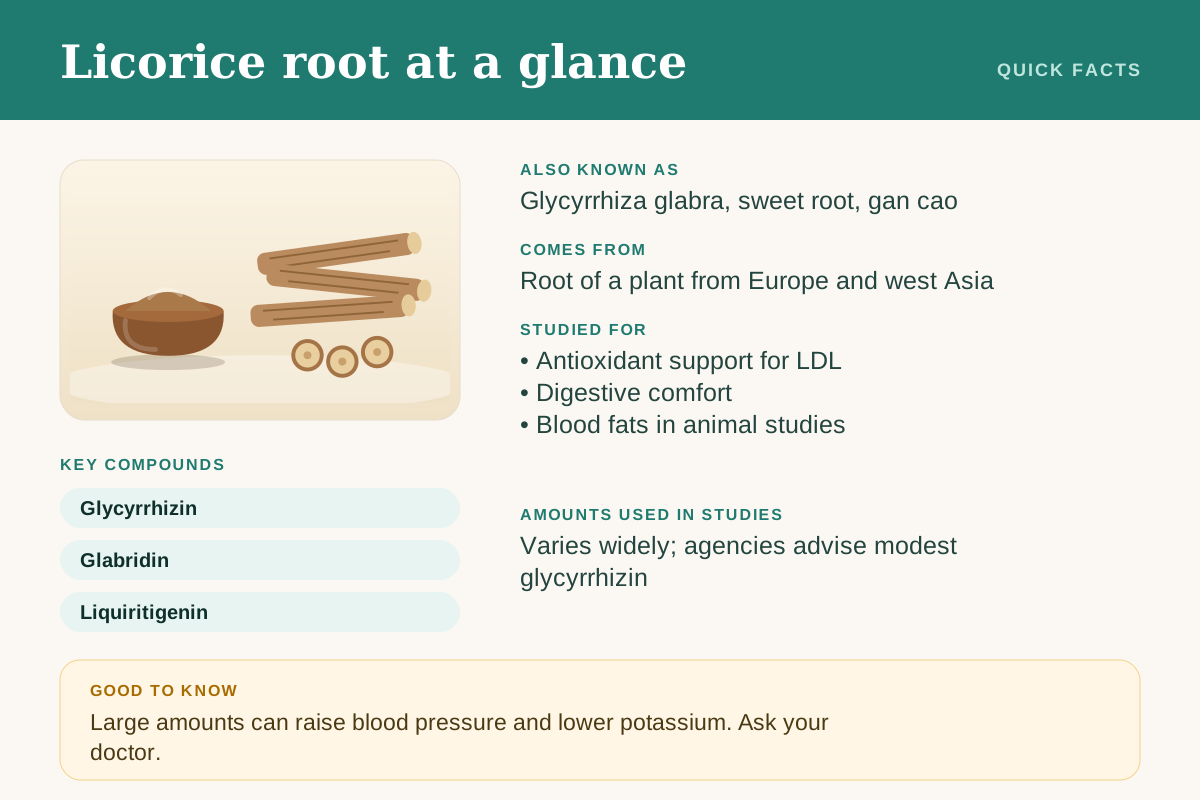
The best known compound in licorice root is glycyrrhizin, also called glycyrrhizic acid. It is many times sweeter than table sugar and gives licorice its taste. Glycyrrhizin is also the compound responsible for licorice's effect on blood pressure, which is covered below.
The root also contains a group of flavonoids that give it its yellow color, including liquiritigenin, isoliquiritigenin and glabridin. Glabridin is found mainly in Glycyrrhiza glabra and has drawn interest from heart health researchers.
| Compound | What it does or has been studied for |
|---|---|
| Glycyrrhizin | Natural sweetness; in large amounts it affects sodium, potassium and blood pressure |
| Glabridin | Antioxidant activity and protection of LDL particles from oxidation in early research |
| Liquiritigenin | Antioxidant and anti-inflammatory activity in lab studies |
| Isoliquiritigenin | Lab studies on inflammation and blood sugar |
What licorice root has been studied for
The National Center for Complementary and Integrative Health notes that licorice has been studied for digestive complaints, sore throat and other uses, and that the evidence for most of them is still limited. Licorice research is active, though, and some of it touches on heart and metabolic health.
Much of the heart-related interest centers on glabridin. When LDL cholesterol becomes oxidized, it is more likely to be taken up into artery walls, where it can contribute to plaque. Lab studies, along with a few small human studies, suggest licorice root extract with a high glabridin content may help protect LDL from oxidation. Animal studies have also looked at licorice flavonoids for blood fats, body fat and blood sugar, with some encouraging findings.
These results are early and mostly come from the lab and from animals. A fair summary is that licorice contains compounds with interesting antioxidant activity that may support heart and metabolic health, and that more human research is needed.
A special form called deglycyrrhizinated licorice, or DGL, has most of the glycyrrhizin removed. DGL is usually sold as chewable tablets for occasional digestive discomfort, and because the glycyrrhizin is taken out, it does not carry the same blood pressure concern.
How licorice affects blood pressure and potassium
Blood pressure tends to creep up with age, so this effect is worth understanding if you are over 35. Your kidneys balance sodium and potassium with help from a hormone called aldosterone. Cortisol, your main stress hormone, can trigger the same receptors as aldosterone, but your kidneys normally have an enzyme that switches cortisol off before it gets there.
When your body breaks down glycyrrhizin, it forms glycyrrhetinic acid, which slows that enzyme. More cortisol then reaches the receptors and acts like aldosterone. The result is that the body holds on to more sodium and water and loses more potassium. Over days or weeks, this can raise blood pressure and lower blood potassium. Low potassium can cause muscle weakness, cramps and, in serious cases, an irregular heartbeat.
The effect depends on how much glycyrrhizin you take in and for how long, and some people are more sensitive than others. The FDA has advised that adults 40 and older who eat 2 ounces of black licorice a day for at least two weeks could end up in the hospital with an irregular heart rhythm. Small amounts used for flavor or as one ingredient in a blend are a very different situation from eating bags of licorice candy, but it is still sensible to know about.
Amounts used in studies
Studies have used licorice root powder, whole extracts, glabridin-rich extracts and DGL, all in very different amounts, so there is no single standard dose. In general, researchers and food safety agencies focus on how much glycyrrhizin a person takes in each day, and they advise keeping long-term intake modest.
ColestZen does not publish the amount of licorice root or any other ingredient per capsule, and it does not say whether its licorice has the glycyrrhizin removed. If blood pressure or potassium is a concern for you, that is a good reason to show the label to your doctor before you start.
Safety and who should ask a doctor
Most healthy adults can enjoy licorice in normal food amounts without any trouble. Because of its effect on sodium and potassium, though, please check with your doctor before taking licorice in supplement form if any of these apply to you:
- You have high blood pressure, heart disease, heart rhythm problems or kidney disease.
- You have low potassium, or you take a diuretic (water pill) that can lower potassium.
- You take blood pressure medicine, digoxin, corticosteroids such as prednisone, or warfarin.
- You are pregnant or breastfeeding. Licorice in larger amounts is not considered safe during pregnancy.
Signs that licorice may not agree with you include swelling in the ankles, headaches, unusual tiredness, muscle weakness or a racing or fluttering heartbeat. If you notice any of these, stop taking it and call your doctor. Checking your blood pressure at home a few times a week during the first month of any new supplement is a simple habit that gives you and your doctor useful information.
Why licorice root is in the ColestZen formula
ColestZen is a two-capsule daily supplement with 18 ingredients for healthy cholesterol, blood sugar and metabolic health. Licorice root brings flavonoids such as glabridin, which have been studied for antioxidant support of LDL particles, and it has a long history of use in herbal blends where it is added alongside other plants. It sits next to botanicals like cinnamon bark, bitter melon and yarrow, and nutrients like magnesium, vitamin E and chromium.
As one ingredient among 18, licorice is part of a broader approach to heart and metabolic support. To see how the full formula is put together, what it costs, how the 60-day money-back guarantee works and who it may suit best, read our full ColestZen review.
Enjoying licorice sensibly
If you like the taste of licorice, you can still enjoy it. Licorice root tea once in a while, a few pieces of real licorice candy, or a cough drop during a cold are fine for most people. The concerns come with large amounts taken every day over weeks. Checking labels helps too: candy and teas that list licorice extract or glycyrrhizin contain the real thing, while many red and black candies use anise or artificial flavors instead.
Eating potassium-rich foods such as bananas, potatoes, beans, spinach and yogurt is good for blood pressure in general, and keeping salt in check helps your kidneys keep sodium and potassium in balance.
Frequently asked questions
Does licorice root raise blood pressure?
It can. Glycyrrhizin in licorice makes the body hold on to sodium and lose potassium, which can raise blood pressure when large amounts are taken for weeks. If you have high blood pressure or heart problems, ask your doctor before taking licorice supplements.
What is the difference between licorice root and DGL?
DGL stands for deglycyrrhizinated licorice. It is licorice root with most of the glycyrrhizin removed, so it does not carry the same blood pressure and potassium concern. It is usually sold as chewable tablets for digestion.
Is black licorice candy the same as licorice root?
Not always. Many black licorice candies in the US are flavored mainly with anise oil. Candies that list licorice extract do contain glycyrrhizin, and the FDA advises adults over 40 not to eat large amounts every day.
How much licorice root is in ColestZen?
The brand does not publish the amount of each ingredient per capsule or say whether its licorice is deglycyrrhizinated. If you have blood pressure, heart or kidney concerns, show the label to your doctor before starting.
Sources
- NCCIH: Licorice root
- U.S. Food and Drug Administration: Black licorice, trick or treat?
- MedlinePlus: Licorice
- Memorial Sloan Kettering Cancer Center, About Herbs: Licorice
This guide is for general information and is not medical advice. Talk to your doctor before starting any supplement, especially if you take medication.