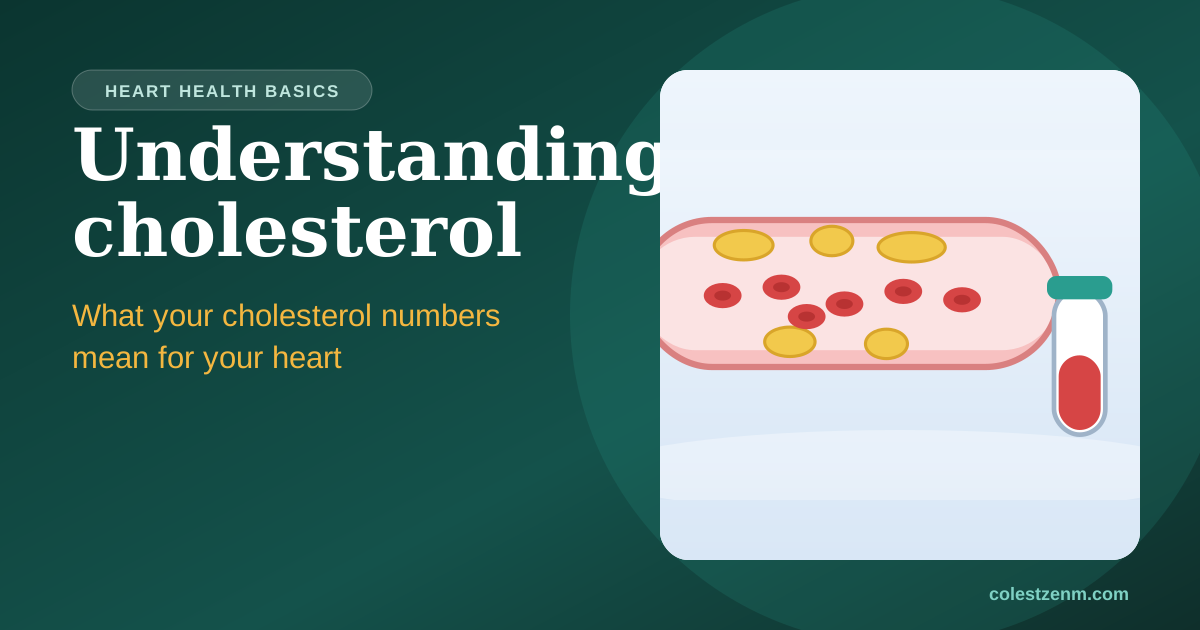
Cholesterol has a bad reputation, yet every cell in your body needs it. Problems start when too much of certain kinds builds up in the blood over many years. That usually happens without a single symptom, so a simple blood test is how most people find out where they stand.
This guide explains what cholesterol does, what each number on a lipid panel means, the ranges doctors use for adults, and the food and lifestyle habits that help keep those numbers in a good place. It's written for adults in their late 30s and older, when levels often start to drift upward and regular checkups become more useful.
What cholesterol is and why your body needs it
Cholesterol is a waxy, fat-like substance found in every cell. Your liver makes all the cholesterol your body needs. The rest comes from animal foods such as meat, poultry, eggs and full-fat dairy, which is why plant foods contain none.
Your body puts cholesterol to work in several ways. It forms part of the outer membrane of every cell, helping cells keep their shape. It's the starting material for hormones such as estrogen, testosterone and cortisol. Your skin uses it to make vitamin D when exposed to sunlight, and your liver turns it into bile acids that help you digest fat.
Because cholesterol is fatty and blood is mostly water, the two don't mix. Your body solves this by packing cholesterol into tiny particles called lipoproteins, which carry it through the bloodstream. The type of lipoprotein makes a big difference to your heart.
LDL, HDL and triglycerides in brief
LDL (low-density lipoprotein) is often called bad cholesterol. It carries cholesterol out to the tissues that need it. When there is more LDL than the body can use, it can settle into the walls of arteries and, together with other substances, form plaque. Over years, plaque narrows arteries and makes it harder for blood to flow to the heart and brain.
HDL (high-density lipoprotein) is the one people call good cholesterol. It picks up extra cholesterol and carries it back to the liver, which clears it from the body. Higher HDL is generally a good sign.
Triglycerides are a different type of fat. When you eat more calories than you burn, especially from sugar, refined starches and alcohol, your body stores the extra as triglycerides. High triglycerides often show up alongside high LDL or low HDL, and together they add to heart risk.
What a lipid panel measures
A lipid panel (also called a lipid profile or cholesterol test) is a standard blood test that measures several fats at once. Some doctors ask you not to eat for 8 to 12 hours beforehand, mostly because a recent meal can push triglycerides up. Others accept a non-fasting sample, so check what your clinic wants.
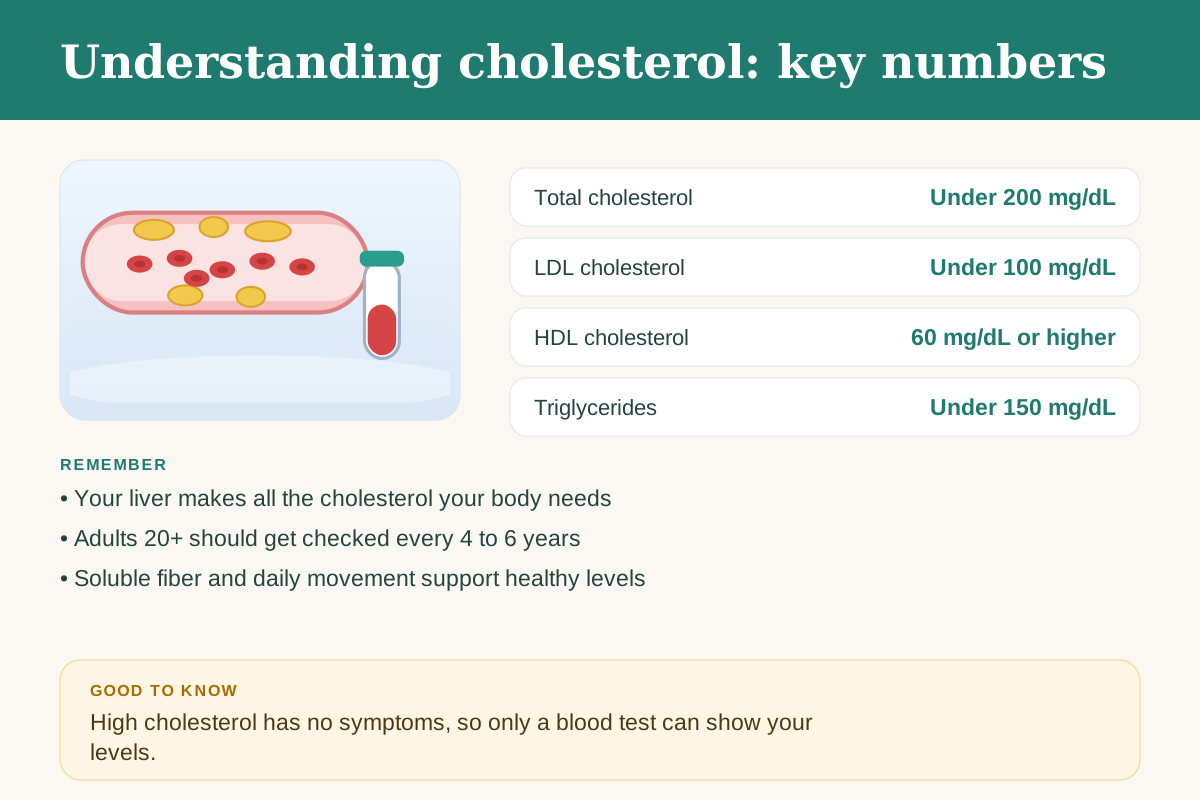
Many labs calculate LDL from your total cholesterol, HDL and triglycerides instead of measuring it directly. Non-HDL cholesterol is simply total cholesterol minus HDL, and it captures all the particles that can contribute to plaque. These are the standard ranges for adults, based on MedlinePlus:
| Measurement | Healthy range for adults | Good to know |
|---|---|---|
| Total cholesterol | Under 200 mg/dL | The overall amount in your blood |
| LDL cholesterol | Under 100 mg/dL | Your doctor may set a lower goal if your risk is higher |
| HDL cholesterol | 60 mg/dL or higher is best | Under 40 mg/dL is low for men, under 50 mg/dL is low for women |
| Non-HDL cholesterol | Under 130 mg/dL | Total cholesterol minus HDL |
| Triglycerides | Under 150 mg/dL | 150 to 199 is borderline high, 200 or more is high |
Ranges can vary a little between labs. Your doctor will also read your results alongside your blood pressure, blood sugar, smoking status, age and family history, because the same LDL number can mean different things for two different people.
What raises cholesterol
Some causes are in your hands and some aren't. According to the National Heart, Lung, and Blood Institute, everyday habits are the most common reason for high LDL or low HDL.
- Diet. Foods high in saturated fat, such as fatty cuts of meat, butter, cheese, full-fat dairy, and coconut and palm oils, raise LDL. Trans fats, still found in some fried and packaged baked goods, raise LDL and lower HDL.
- Weight. Extra body weight, especially around the waist, tends to come with higher LDL and triglycerides and lower HDL.
- Activity. People who sit most of the day are more likely to have unhealthy cholesterol levels.
- Smoking. It lowers HDL, particularly in women, and raises LDL.
- Genetics. Your genes affect how quickly your body makes LDL and clears it from the blood. Some families carry an inherited condition called familial hypercholesterolemia, which causes very high LDL from a young age, even in people who eat well and stay slim.
- Age. As you get older, your liver becomes less efficient at removing LDL from the blood.
- Menopause. Between ages 20 and 39, men are more likely than women to have high total cholesterol. After menopause, women's total and LDL cholesterol usually go up while HDL goes down.
Certain health conditions, including an underactive thyroid, type 2 diabetes and kidney disease, can also affect cholesterol, as can some medicines. If your numbers change suddenly, it's worth asking your doctor whether something else is involved.
How often adults should get checked
High cholesterol causes no symptoms, so testing is the only way to know your levels. The American Heart Association recommends that adults aged 20 and older at normal risk have their cholesterol checked every 4 to 6 years.
Many people need testing more often. Your doctor may check you every year or two if you have diabetes, high blood pressure, heart disease, a family history of early heart disease or high cholesterol, or if you smoke. After 40, doctors also use your cholesterol results to estimate your 10-year risk of heart attack and stroke, which often means more regular checks. If you can't remember your last lipid panel, that's a good reason to ask at your next appointment.
Everyday food habits that support healthy levels
Small, steady changes to what's on your plate tend to last longer than a strict diet. These habits are widely recommended for people who want to keep cholesterol in a healthy range:
- Eat more soluble fiber. Oatmeal, barley, beans, lentils, apples, pears and citrus fruit contain a type of fiber that binds cholesterol in the gut and helps carry it out of the body.
- Swap the fats you cook with. Olive oil, canola oil, avocado, nuts and seeds can replace butter, lard and coconut oil in most meals.
- Have fish a couple of times a week. Salmon, sardines, trout and mackerel provide omega-3 fats, which support healthy triglyceride levels.
- Choose leaner proteins more often, such as poultry without skin, fish, beans and tofu, and keep processed meats like bacon and sausage for occasional meals.
- Cut back on sugary drinks, sweets and white bread, which can push triglycerides up.
- Fill half your plate with vegetables and pick whole grains such as brown rice, whole wheat and quinoa.
Read food labels for saturated fat and for partially hydrogenated oils, the main source of trans fat. You don't need to give up favorite foods completely. A steak dinner on the weekend matters far less than what you eat on an ordinary Tuesday.
Lifestyle habits beyond the plate
Regular movement helps raise HDL and lower triglycerides. The CDC recommends that adults get at least 150 minutes of moderate activity a week, such as brisk walking, cycling or swimming. That works out to 30 minutes on five days, and shorter bouts spread through the day still count. Add muscle-strengthening work, like resistance bands, weights or gardening, on at least 2 days a week.
If you smoke, quitting is one of the most helpful steps you can take, since HDL starts to improve after you stop. Losing even a modest amount of weight can improve LDL and triglycerides for people who carry extra pounds. Keeping alcohol moderate helps too, because heavy drinking raises triglycerides. Good sleep and practical ways to handle stress make all of these habits easier to keep up.
When medication is used
For some people, healthy habits are enough. Others need medicine as well, and that's a decision for you and your doctor to make together. Doctors usually consider medication when LDL is very high, when someone already has heart disease, when diabetes or several other risk factors are present, or when familial hypercholesterolemia runs in the family.
Statins are the most widely prescribed cholesterol medicines. They reduce how much cholesterol the liver makes. Other options include ezetimibe, which limits how much cholesterol the gut absorbs, and newer injectable medicines called PCSK9 inhibitors. Needing medication doesn't mean you failed at diet or exercise, since genes and age play a large part. Food and activity habits still matter once you start a prescription, and you should never stop or change a cholesterol medicine without talking to the doctor who prescribed it.
Where a supplement like ColestZen fits
Once the basics are in place, some adults like to add a daily supplement. ColestZen is an 18-ingredient formula taken as 2 capsules a day. It combines botanicals such as cinnamon bark, bitter melon, gymnema sylvestre and banaba leaf with nutrients like chromium, magnesium, alpha lipoic acid and vitamins C and E. It's designed to support healthy cholesterol and blood sugar levels that are already in the normal range, as one part of a routine built on good food, regular movement and checkups.
A supplement works best alongside your doctor's advice, and ColestZen isn't a replacement for prescribed medication or for regular lipid panels. If you take medicine for diabetes, talk to your doctor first, because several of its ingredients have been studied for their effect on blood sugar. The same goes for blood thinners, since vitamin E may add to their effect. ColestZen comes with a 60-day money-back guarantee, and you can read our full ColestZen review for a closer look at the ingredients, pricing and refund terms.
Frequently asked questions
Is all cholesterol bad for you?
No. Your body needs cholesterol to build cells, make hormones and vitamin D, and digest fat. Health concerns come from having too much LDL or too many triglycerides in the blood over time, or too little HDL, which helps carry extra cholesterol back to the liver.
Do I need to fast before a cholesterol test?
It depends on your doctor and the lab. Some ask you not to eat for 8 to 12 hours beforehand because a recent meal can raise triglycerides, while many now accept a non-fasting sample. Ask when you book the test, and keep drinking water either way.
Can a slim, active person have high cholesterol?
Yes. Genes have a large effect on how your body makes and clears LDL, and inherited conditions like familial hypercholesterolemia can cause high levels in people who eat well and exercise. That's one reason regular testing matters for everyone, whatever their size.
Can ColestZen replace cholesterol medication?
No. ColestZen is a dietary supplement designed to support healthy cholesterol and blood sugar levels that are already in the normal range. If your doctor has prescribed a statin or another medicine, keep taking it as directed and ask your doctor before adding any supplement.
Sources
- MedlinePlus: Cholesterol Levels: What You Need to Know
- MedlinePlus: Triglycerides Test
- MedlinePlus Medical Encyclopedia: Triglyceride level
- National Heart, Lung, and Blood Institute: Blood Cholesterol, Causes and Risk Factors
- American Heart Association: What Your Cholesterol Levels Mean
- American Heart Association: How To Get Your Cholesterol Tested
- CDC: Adult Activity, An Overview (Physical Activity Guidelines for Americans)
This guide is for general information and is not medical advice. Talk to your doctor about your own numbers and treatment.