Vitamin C is probably the most familiar vitamin there is. Most of us grew up hearing about oranges and colds, but this nutrient does a lot more than that. Your body uses it to build collagen for healthy blood vessels, to protect cells from oxidative damage and to absorb iron from plant foods.
Below you will find what vitamin C is, what it has been studied for in heart and metabolic health, how much adults need, which foods supply the most and when to check with a doctor. You will also see why it is one of the 18 ingredients in ColestZen.
What vitamin C is
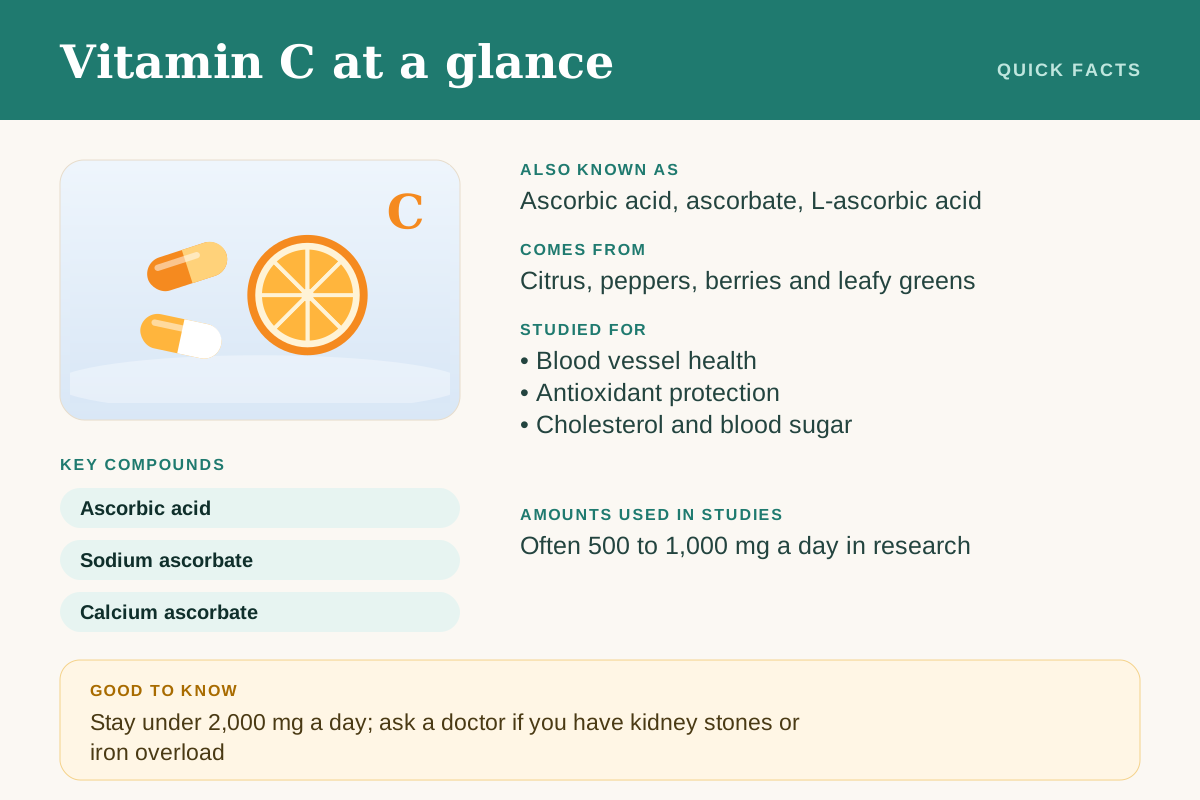
Vitamin C, also called ascorbic acid, is a water-soluble vitamin. Most animals make their own, but humans lost that ability long ago, along with other primates and guinea pigs. That means every bit of vitamin C you have comes from food or supplements.
Because it dissolves in water, your body does not store much of it. Extra amounts leave in urine, which is why a steady daily intake matters more than an occasional large dose. When intake stays very low for weeks, the result is scurvy, the disease that once plagued sailors on long voyages. In 1747 a Scottish naval surgeon, James Lind, showed that oranges and lemons helped sailors recover from scurvy, one of the earliest controlled experiments in medicine. Scurvy is rare in the US today, though it still turns up in people with very limited diets.
What vitamin C does in the body
Vitamin C has several jobs, and some of them matter directly for your heart and circulation.
- It is needed to make collagen, the protein that gives structure to skin, gums, tendons and the walls of your blood vessels. Easy bruising and bleeding gums are early signs of scurvy for this reason.
- It is an antioxidant. It neutralizes free radicals, unstable molecules that can damage cells, fats and DNA when they build up.
- It helps recycle vitamin E, another antioxidant, back to its active form so it can keep protecting cell membranes.
- It improves absorption of non-heme iron, the type found in beans, lentils, spinach and fortified cereals.
- It helps the body make carnitine, which carries fats into cells to be burned for energy, and some brain chemicals such as norepinephrine.
It also supports normal immune function. White blood cells hold high concentrations of vitamin C and use it up quickly during an infection.
What vitamin C has been studied for
Heart and blood vessel health
Researchers have been interested in vitamin C and the heart for a long time. Oxidized LDL cholesterol is one of the things that helps plaque form in artery walls, and vitamin C is an antioxidant, so the idea makes sense. Large observational studies have found that people who eat plenty of fruit and vegetables and have higher blood levels of vitamin C tend to have lower rates of heart disease.
Trials that gave people vitamin C supplements have had mixed results. Several large studies did not find that extra vitamin C reduced heart attacks or strokes in people who were already reasonably well nourished. The NIH Office of Dietary Supplements sums up the evidence as inconclusive, which is why the usual advice is to get vitamin C from food first and to view supplements as a way of filling gaps.
Blood vessel function and blood pressure
Some smaller studies have looked at how vitamin C affects the lining of blood vessels (the endothelium) and how well arteries relax. Others have measured blood pressure. Several found modest benefits, though results vary from study to study, and scientists are still working out who responds best.
Cholesterol and blood sugar
A number of trials have measured cholesterol, triglycerides and blood sugar in people taking vitamin C, including adults with type 2 diabetes. Some reported small improvements and others found none. Smokers and people with low starting levels seem more likely to see a change, which fits with the idea that vitamin C helps most when you are short on it.
Colds
For the general population, taking vitamin C every day does not seem to reduce how often people catch a cold. Regular supplements may shorten colds slightly, and people under heavy physical stress, such as marathon runners, may benefit more.
How much vitamin C you need
The Recommended Dietary Allowance (RDA) for adults is the amount that meets the needs of nearly all healthy people. Smokers need more because smoking uses up vitamin C faster.
| Group | Daily amount |
|---|---|
| Men 19 and older | 90 mg |
| Women 19 and older | 75 mg |
| Pregnancy (19 and older) | 85 mg |
| Breastfeeding (19 and older) | 120 mg |
| Smokers | Add 35 mg to the amount above |
| Upper limit for adults | 2,000 mg |
The Daily Value on US food and supplement labels is 90 mg. Most Americans get close to the RDA from food, but people who smoke, people with very limited diets and some people with digestive conditions that affect absorption are more likely to fall short.
Best food sources of vitamin C
Fruits and vegetables supply almost all the vitamin C in the American diet. A single serving of several of these foods covers most or all of a day's needs.
| Food | Serving | Vitamin C |
|---|---|---|
| Red bell pepper, raw | Half a cup | About 95 mg |
| Orange juice | Three quarters of a cup | About 93 mg |
| Orange | 1 medium | About 70 mg |
| Kiwifruit | 1 medium | About 64 mg |
| Green bell pepper, raw | Half a cup | About 60 mg |
| Broccoli, cooked | Half a cup | About 51 mg |
| Strawberries | Half a cup | About 49 mg |
| Brussels sprouts, cooked | Half a cup | About 48 mg |
Vitamin C breaks down with heat, light and long storage, so fresh and lightly cooked produce keeps more of it. Steaming or microwaving vegetables loses less than boiling them in a big pot of water. Eating some foods raw, such as peppers, berries and citrus, is an easy way to get the full amount.
Amounts used in studies and supplement forms
Research on heart and metabolic health has often used 500 to 1,000 mg of vitamin C a day, well above the RDA but under the 2,000 mg upper limit. Studies usually run for several weeks to several months.
Most supplements use ascorbic acid, which the body absorbs about as well as the vitamin C in food. Mineral ascorbates such as sodium ascorbate and calcium ascorbate are less acidic and may be gentler on the stomach for some people. Absorption becomes less efficient as the dose climbs, so a moderate amount taken regularly makes more sense than an occasional megadose.
Safety and who should talk to a doctor
Vitamin C has very low toxicity, and food sources are safe for everyone. With supplements, the most common problems above the 2,000 mg upper limit are diarrhea, nausea and stomach cramps. A few groups should be more careful:
- People with hemochromatosis, a condition that causes iron overload, should talk to their doctor, because vitamin C increases iron absorption.
- People with a history of kidney stones should ask before taking high doses, since large amounts may raise the risk of stones in some people.
- If you are having chemotherapy or radiation treatment, check with your cancer care team before taking antioxidant supplements.
- People taking a statin together with niacin for cholesterol should mention any antioxidant supplements to their doctor, as the combination has been studied for possible interactions.
During pregnancy and breastfeeding, vitamin C needs go up slightly, and a prenatal vitamin plus a diet with plenty of fruit and vegetables usually covers them. If you take prescription medicine, it is always a good idea to share your supplement list with your doctor or pharmacist.
Why vitamin C is in ColestZen
ColestZen is designed to support heart and metabolic health, and vitamin C fits that aim well. It is needed for the collagen in blood vessel walls, it protects cells from oxidative stress and it helps recycle vitamin E, which is also part of the ColestZen formula. Those two antioxidants have long been studied together, and they work as a pair in the body.
The brand does not publish how much vitamin C each capsule contains, so we cannot say how the amount compares to the RDA or to research doses. What we can say is that vitamin C is one of the safest and best understood nutrients, and it makes sense in a blend that also includes cinnamon bark, alpha lipoic acid and other ingredients studied for blood sugar and cholesterol support. For the full picture on the formula, its price and the 60-day money-back guarantee, read our full ColestZen review.
Whatever supplement you choose, a plate that is half fruit and vegetables gives you vitamin C along with fiber and potassium, which also support a healthy heart.
Frequently asked questions
How much vitamin C do adults need each day?
The RDA is 90 mg for men and 75 mg for women. Smokers need an extra 35 mg a day. The upper limit for adults is 2,000 mg a day from all sources.
What food has the most vitamin C?
Raw red bell pepper is one of the best, with about 95 mg in half a cup. Oranges, orange juice, kiwifruit, strawberries, broccoli and Brussels sprouts are also excellent sources.
Is vitamin C good for your heart?
Vitamin C helps build healthy blood vessel walls and protects cells from oxidative stress. People who eat plenty of fruit and vegetables tend to have better heart health, while results from supplement trials have been mixed. Food comes first, and supplements can help fill gaps.
How much vitamin C is in ColestZen?
The brand does not list the amount of each ingredient per capsule. Vitamin C is one of 18 ingredients in the blend, which is taken as 2 capsules a day.
Sources
- NIH Office of Dietary Supplements: Vitamin C fact sheet for health professionals
- Food and Nutrition Board, National Academies: Dietary Reference Intakes for Vitamin C, Vitamin E, Selenium, and Carotenoids (2000)
- MedlinePlus: Vitamin C
This guide is for general information and is not medical advice. Talk to your doctor before starting any supplement, especially if you take medication.