Zinc is one of those minerals you only need in small amounts, yet almost every cell in your body depends on it. It helps your immune system, your sense of taste and smell, wound healing, and the way your body handles insulin.
Below you'll find what zinc is, how it works, what researchers have studied it for, which foods supply the most, how much adults need, the safe upper limit, and why zinc earns a spot in the ColestZen formula.
What zinc is
Zinc is an essential trace mineral. Essential means your body can't make it, and trace means you need only a few milligrams a day. Unlike iron or calcium, the body has no special storage tank for zinc, so you need a regular supply from food.
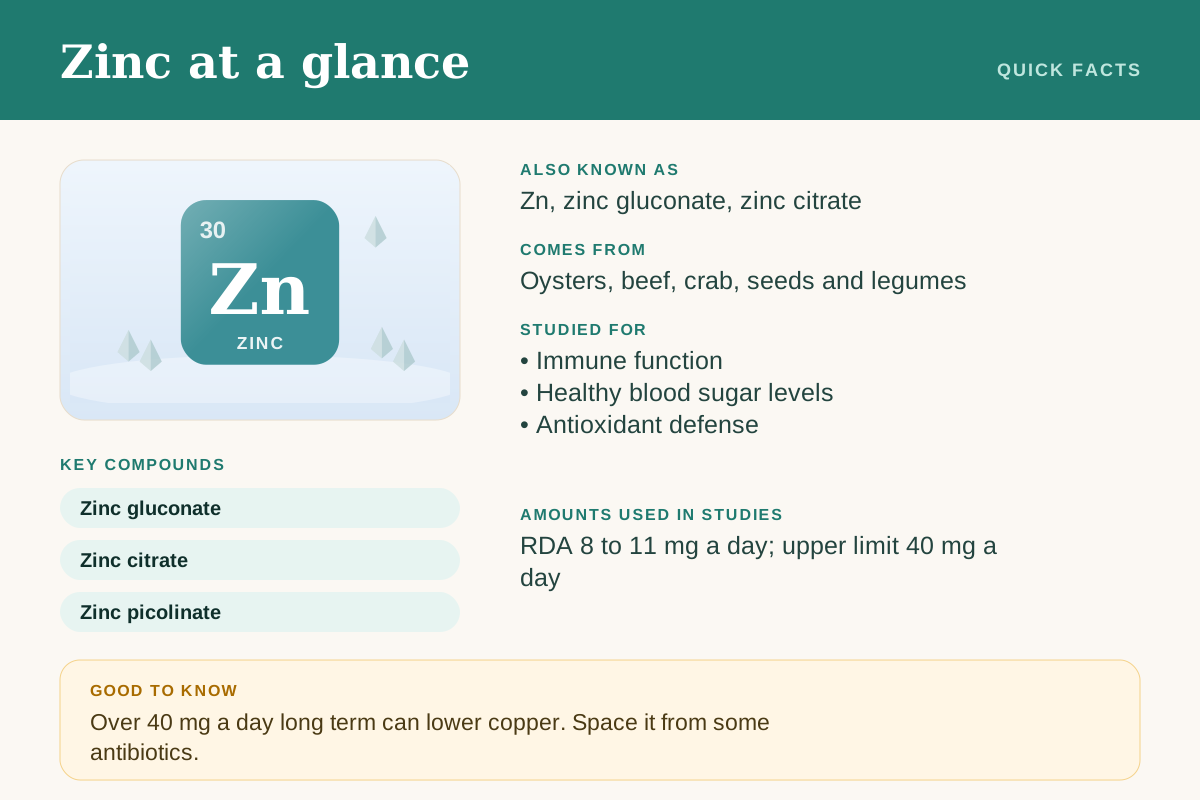
In nature, zinc is found in the earth's crust and is taken up by plants and the animals that eat them. Shellfish, especially oysters, concentrate it to a remarkable degree. In supplements, zinc is bound to another molecule to make it easier to absorb. Common forms you'll see on labels include zinc gluconate, zinc citrate, zinc picolinate, zinc sulfate and zinc oxide.
How zinc works in the body
Zinc is a working part of a long list of enzymes. The NIH Office of Dietary Supplements notes that it is needed for the activity of roughly 100 enzymes, and it also helps hold the shape of many proteins so they can do their jobs. Some of the everyday tasks that need zinc:
- Building proteins and DNA, and supporting normal cell division.
- Helping immune cells develop and respond the way they should.
- Healing cuts and scrapes.
- Keeping your sense of taste and smell working.
- Supporting normal growth during pregnancy, childhood and the teen years.
Zinc also has a close relationship with insulin. The beta cells in the pancreas pack insulin together with zinc before releasing it, which is one reason researchers became interested in zinc and blood sugar. Zinc is part of copper zinc superoxide dismutase, an antioxidant enzyme that helps the body handle oxidative stress.
What zinc has been studied for
Immune health
This is zinc's best-known area. People who are low in zinc are more likely to get infections, which shows how much the immune system relies on it. Zinc lozenges have also been studied for colds, and some trials found that people who started them early had shorter colds, though results vary with the lozenge type and dose. Nasal zinc sprays are a different story: the FDA has warned that some caused a lasting loss of smell, so skip those.
Blood sugar and metabolic health
Because of its link with insulin, zinc has been studied in people with prediabetes and type 2 diabetes. Several reviews of these small trials reported modest improvements in markers such as fasting blood sugar for people taking zinc. The studies differed a lot in dose, length and the people they included, so zinc is best described as a mineral that may support normal glucose metabolism. People with diabetes also tend to lose more zinc in their urine, which gives one more reason to keep an eye on intake.
Heart and blood fats
Some research has looked at zinc and cholesterol or triglyceride levels, with mixed results. There is one point here every reader should know: taking very large amounts of zinc for a long time can lower HDL, the good cholesterol, and cause low copper. More zinc is not better for your heart, which is why staying under the upper limit matters.
Eye health
Zinc is part of the well-known AREDS formula from the National Eye Institute studies, which was studied in people already at high risk of advanced age-related macular degeneration. That formula used a high dose of zinc together with copper and antioxidant vitamins, and it should only be used with an eye doctor's advice.
Food sources of zinc
Animal foods supply most of the zinc in the American diet, and the zinc in them is absorbed more easily. Oysters are in a league of their own. Values below are approximate, based on the NIH Office of Dietary Supplements food list.
| Food | Serving | Zinc (approx.) |
|---|---|---|
| Oysters, cooked | 3 ounces | about 30 mg or more |
| Beef patty, cooked | 3 ounces | 5.3 mg |
| Beef chuck roast, cooked | 3 ounces | about 3.8 mg |
| Alaska king crab, cooked | 3 ounces | 3.2 mg |
| Fortified breakfast cereal | 1 serving | about 2.8 mg |
| Pumpkin seeds, roasted | 1 ounce | 2.2 mg |
| Cashews, roasted | 1 ounce | 1.6 mg |
| Chickpeas, cooked | 1/2 cup | 1.3 mg |
Beans, whole grains and seeds contain zinc too, but they also contain phytates, natural compounds that bind zinc and reduce how much you absorb. Soaking beans and grains, sprouting them, and choosing leavened bread can help. Because of phytates, vegetarians may need as much as 50% more zinc than the RDA, according to the NIH Office of Dietary Supplements.
How much zinc adults need
The Recommended Dietary Allowance (RDA) for zinc is 11 mg a day for adult men and 8 mg a day for adult women. During pregnancy the RDA is 11 mg, and while breastfeeding it is 12 mg.
The Tolerable Upper Intake Level (UL) for adults is 40 mg a day from all sources combined: food, supplements and any cold lozenges. Most studies on blood sugar have used supplement amounts somewhere between a modest daily dose and about 30 to 40 mg a day, while the AREDS eye formula used more and was taken only under medical guidance.
Groups more likely to run low include older adults, vegetarians and vegans, people with digestive conditions such as Crohn's disease or ulcerative colitis, people who have had weight loss surgery, people with alcohol use disorder, and pregnant or breastfeeding women.
Signs your zinc may be running low
Severe zinc deficiency is rare in the US, but a mild shortfall is more common than many people think, especially after 60. Appetite tends to shrink with age, and many older adults eat less meat and seafood, so zinc intake slips without anyone noticing.
Possible signs include a poor appetite, food that tastes bland, slow healing of cuts, catching colds more often, hair loss and rough or dry skin. In children, low zinc can slow growth. None of these signs is specific to zinc, and they have many other causes, so a doctor is the right person to sort them out. There isn't one simple blood test that reliably shows zinc status, which is why doctors usually look at your diet, health history and symptoms together.
If you suspect you are low, start with food. A few oysters once a month, a lean beef or chicken dinner a couple of times a week, or a daily handful of pumpkin seeds can make a real difference.
Safety and who should ask a doctor
Zinc from food is very safe. Problems come from taking too much in supplement form. A large single dose can cause nausea, stomach cramps, vomiting, diarrhea and headaches. Taking zinc with food helps if it upsets your stomach. Over months, intakes well above the 40 mg UL can lead to low copper, a weaker immune response and lower HDL cholesterol.
Please talk with your doctor or pharmacist before adding zinc if you:
- Take quinolone or tetracycline antibiotics. Zinc and these drugs can block each other's absorption, so they are usually taken a few hours apart.
- Take penicillamine for rheumatoid arthritis or Wilson's disease.
- Use thiazide diuretics, which make you lose more zinc in your urine.
- Have diabetes and take blood sugar medicine, since ColestZen also includes several ingredients studied for blood sugar support.
- Are pregnant or breastfeeding.
Why zinc is in ColestZen
ColestZen pairs traditional herbs with a group of vitamins and minerals that the body uses for healthy metabolism. Zinc is a natural fit. It is part of how the pancreas stores and releases insulin, it has been studied for its role in glucose metabolism, and it supports the immune system and antioxidant defenses that matter more as we get older.
The company doesn't list the amount of zinc per capsule, so we can't give you a ColestZen zinc dose. If you also take a multivitamin or zinc lozenges, it makes sense to look at those labels and keep your total under 40 mg a day. To see the full ingredient list, our rating and the 60-day money-back guarantee, head to our full ColestZen review.
A simple way to cover your zinc needs alongside any supplement is to include seafood, lean meat, yogurt, beans and pumpkin seeds in your weekly meals.
Frequently asked questions
How much zinc should I take a day?
Adult men need 11 mg a day and adult women need 8 mg a day, rising to 11 mg in pregnancy and 12 mg while breastfeeding. Many people get much of this from food. The safe upper limit for adults is 40 mg a day from all sources combined.
What foods are highest in zinc?
Oysters have far more zinc than any other food. Beef, crab, lobster, pork, chicken, fortified cereals, pumpkin seeds, cashews, yogurt and chickpeas are also good sources.
Can too much zinc be harmful?
Yes. Large doses can upset your stomach, and taking more than 40 mg a day for a long time can lower copper levels, weaken immune function and lower HDL cholesterol. Stick to the label and count zinc from multivitamins and lozenges too.
Does zinc interact with medications?
Zinc can reduce the absorption of quinolone and tetracycline antibiotics and penicillamine, and thiazide diuretics can increase zinc loss. Ask your pharmacist how to space your doses if you take any of these.
Sources
- NIH Office of Dietary Supplements: Zinc fact sheet for health professionals
- National Eye Institute: AREDS and AREDS2
- MedlinePlus: Zinc in diet
This guide is for general information and is not medical advice. Talk to your doctor before starting any supplement, especially if you take medication.